
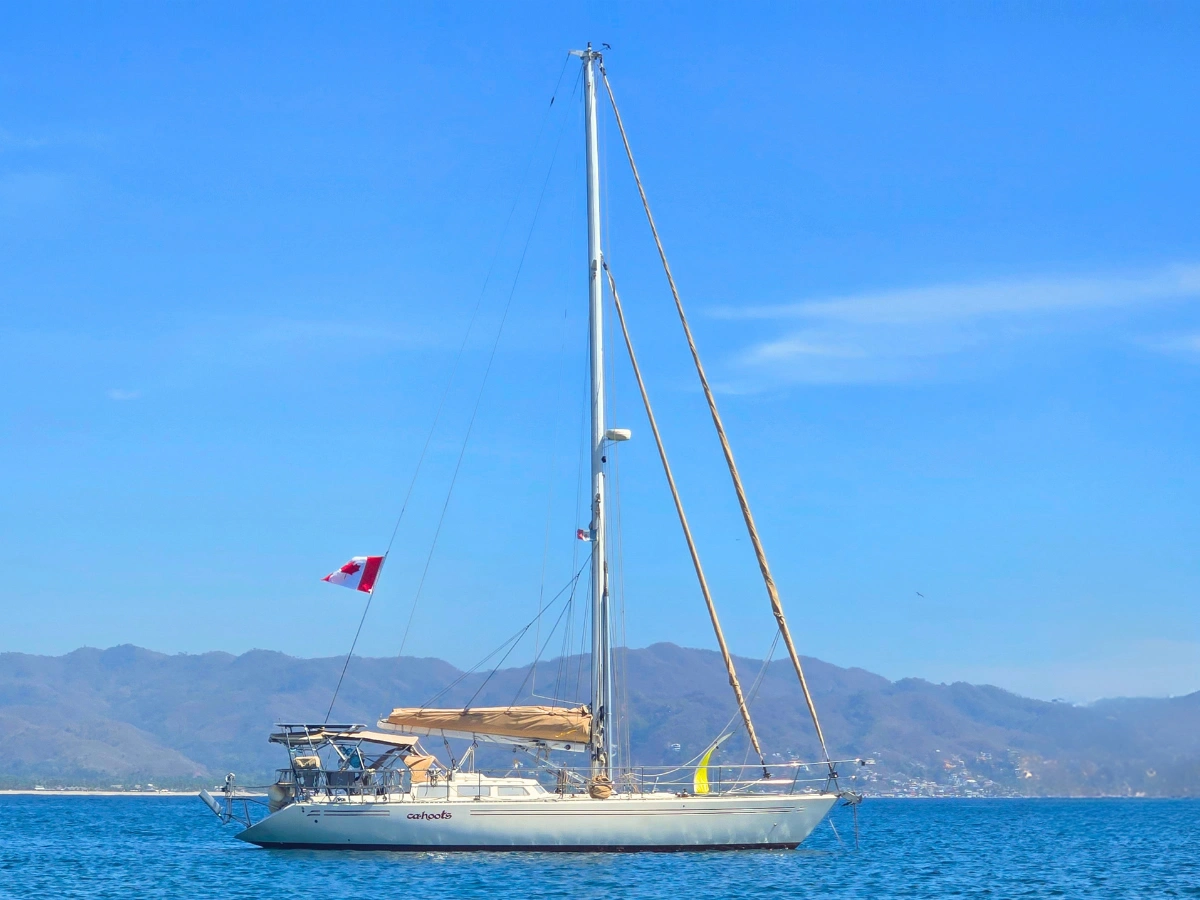
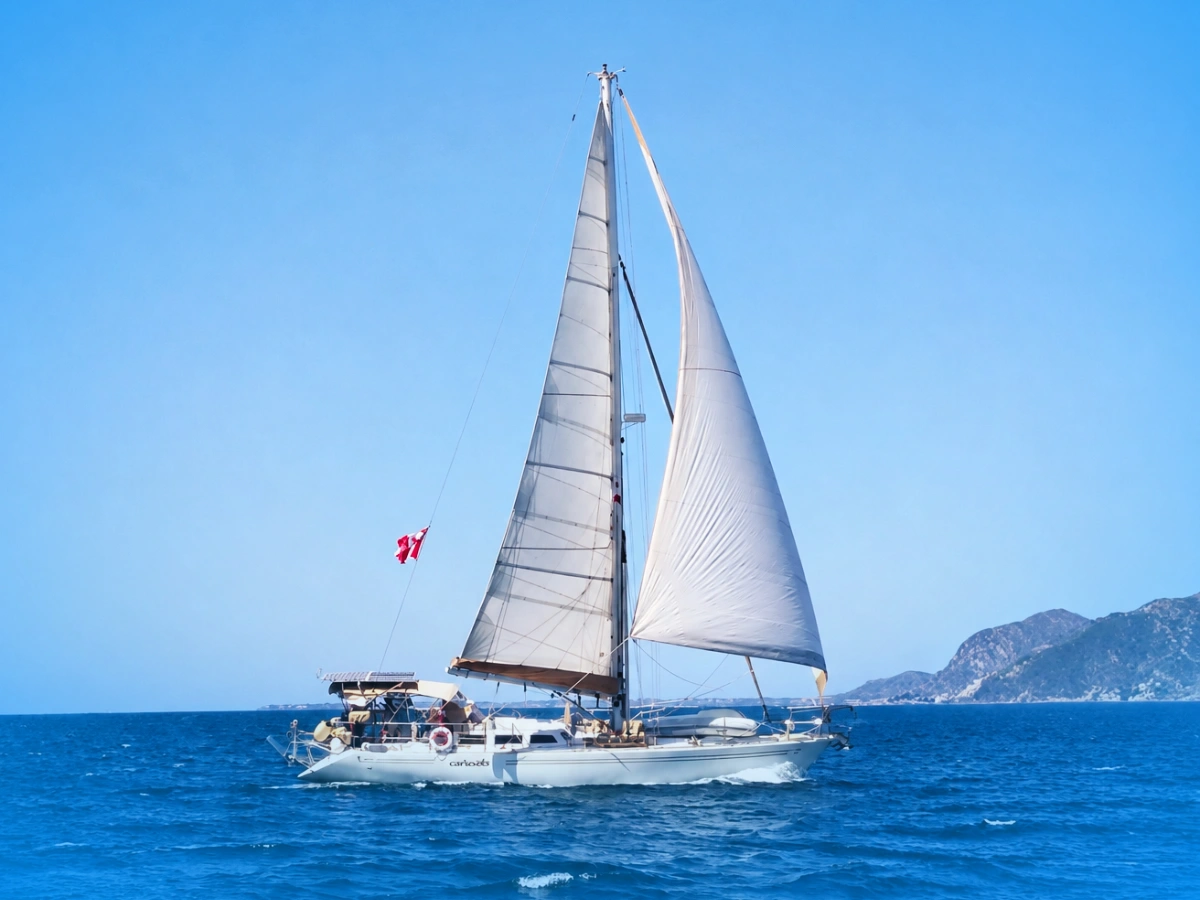
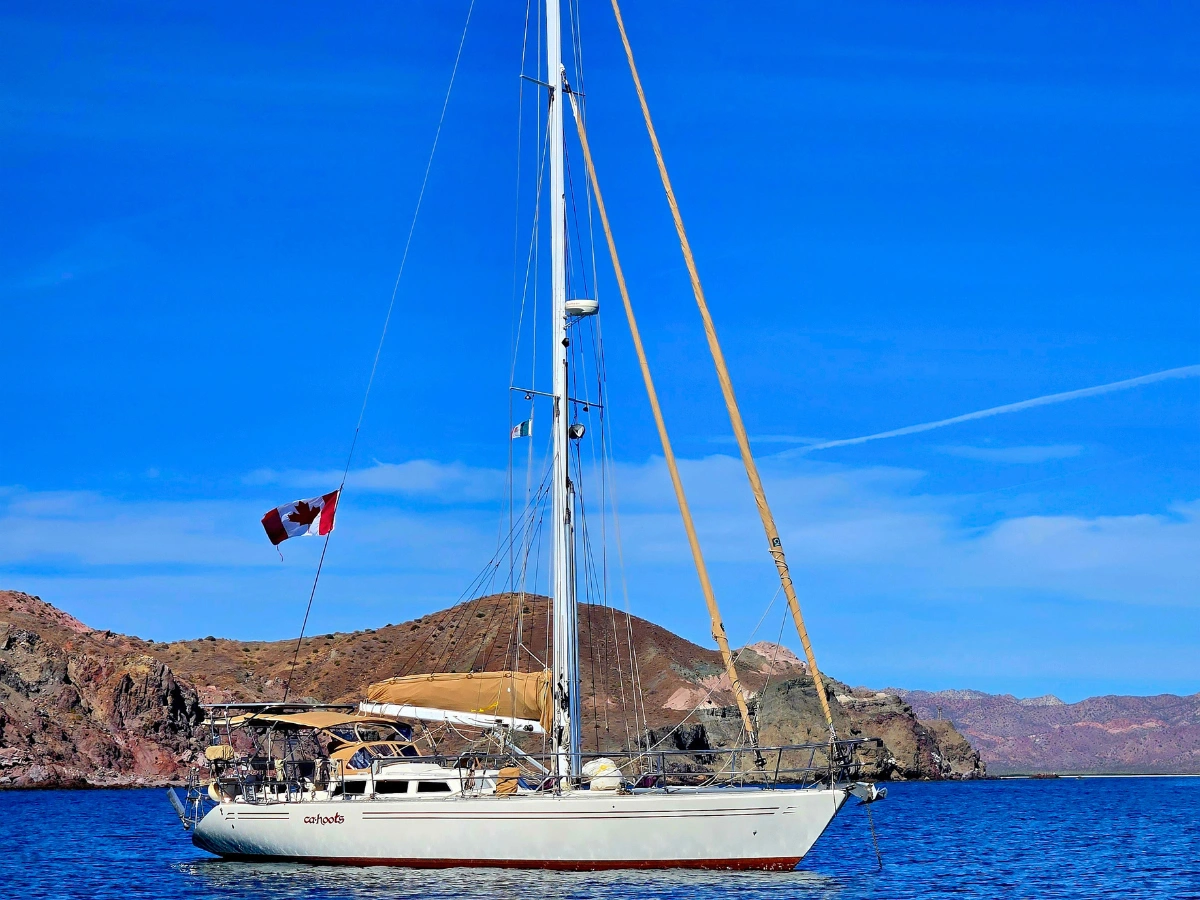
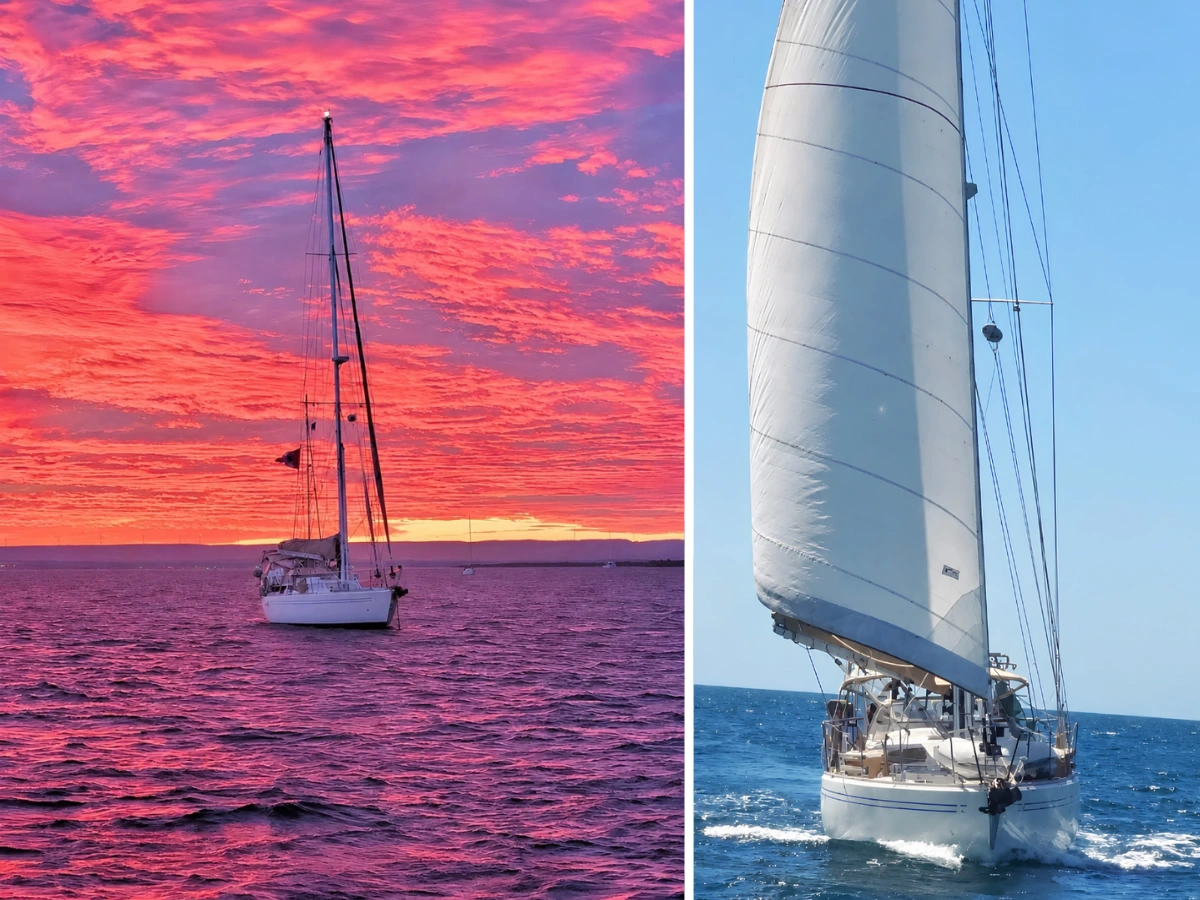
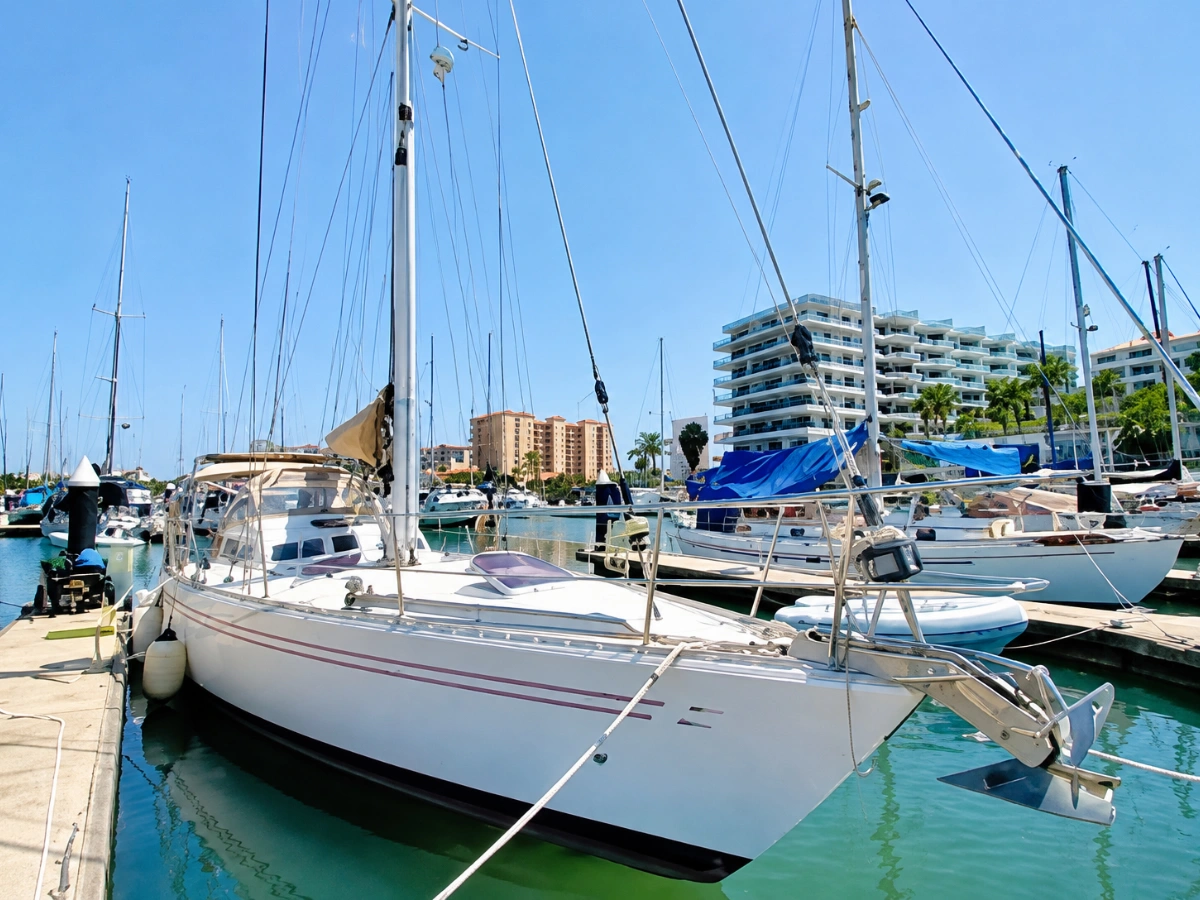
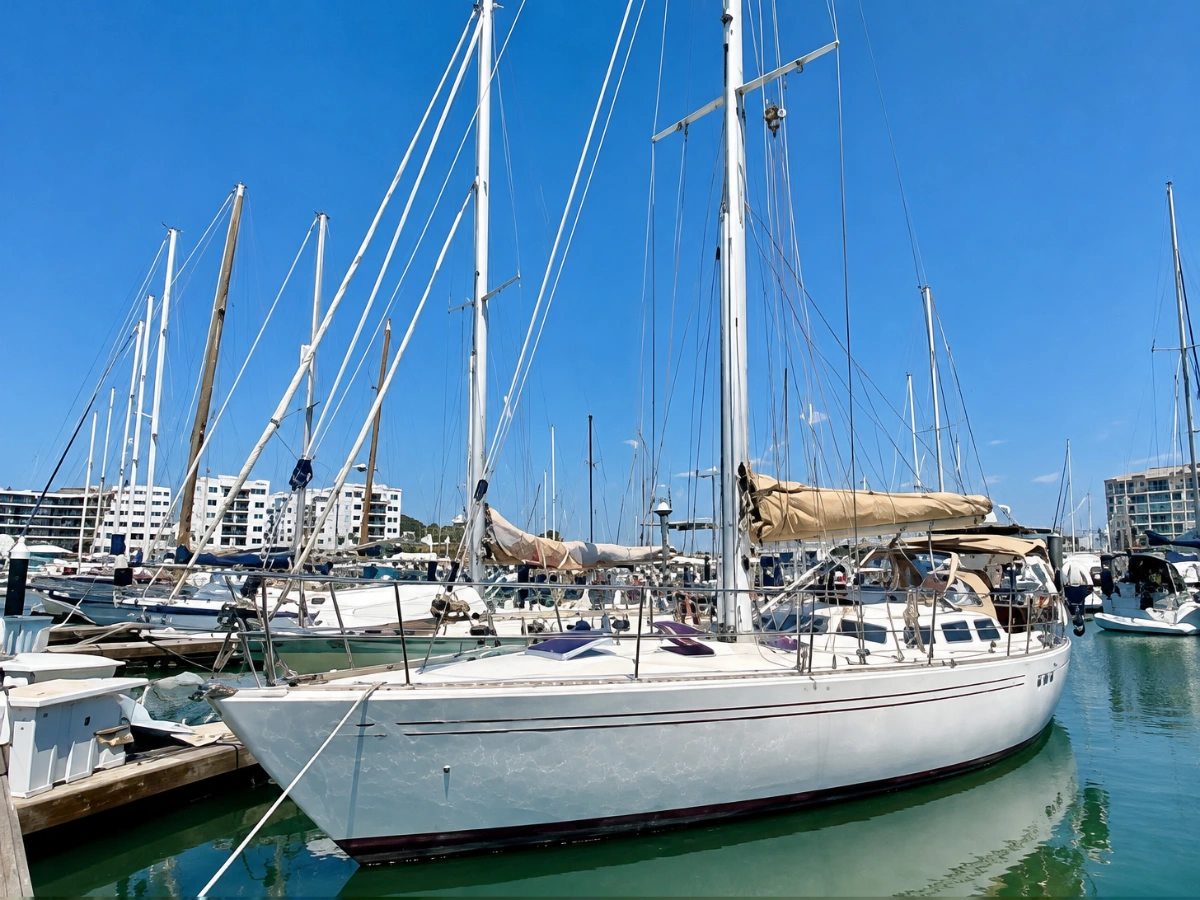
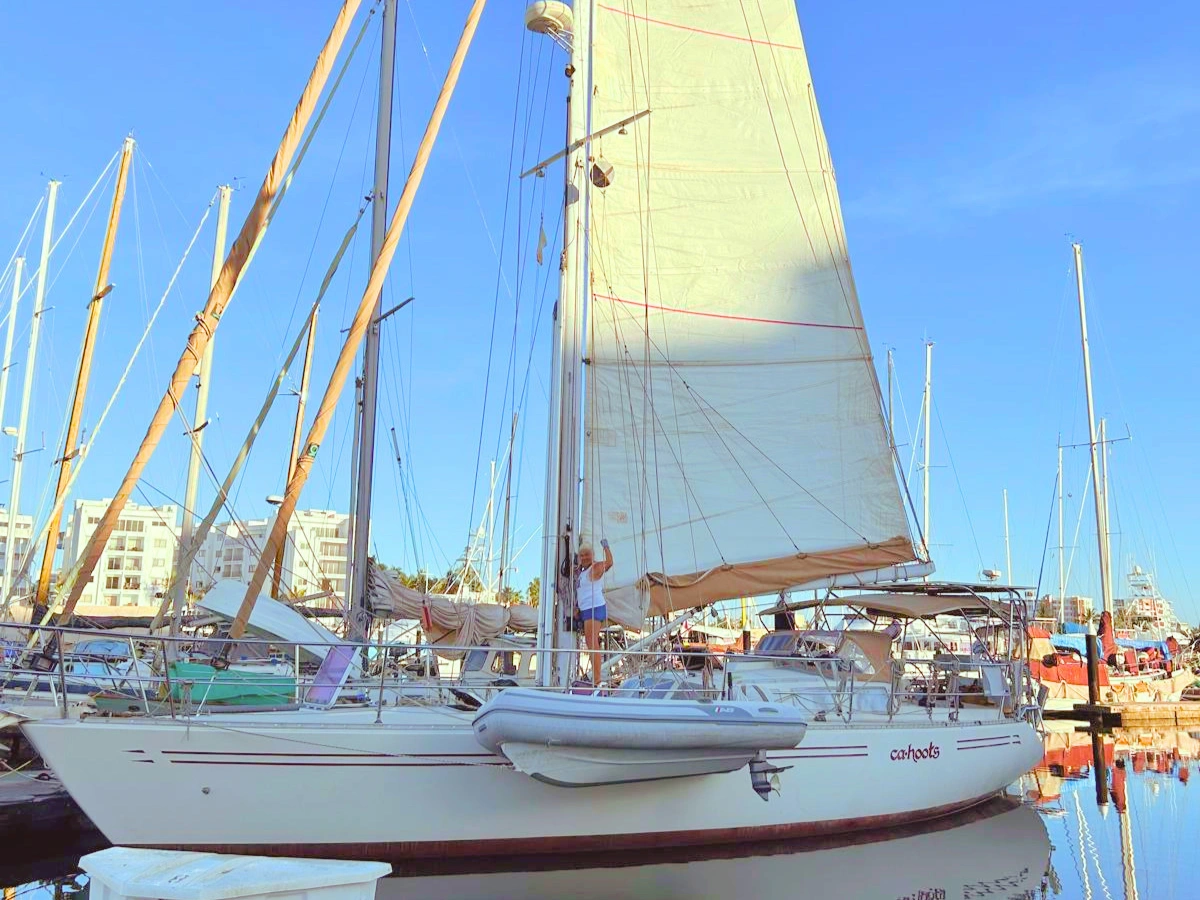
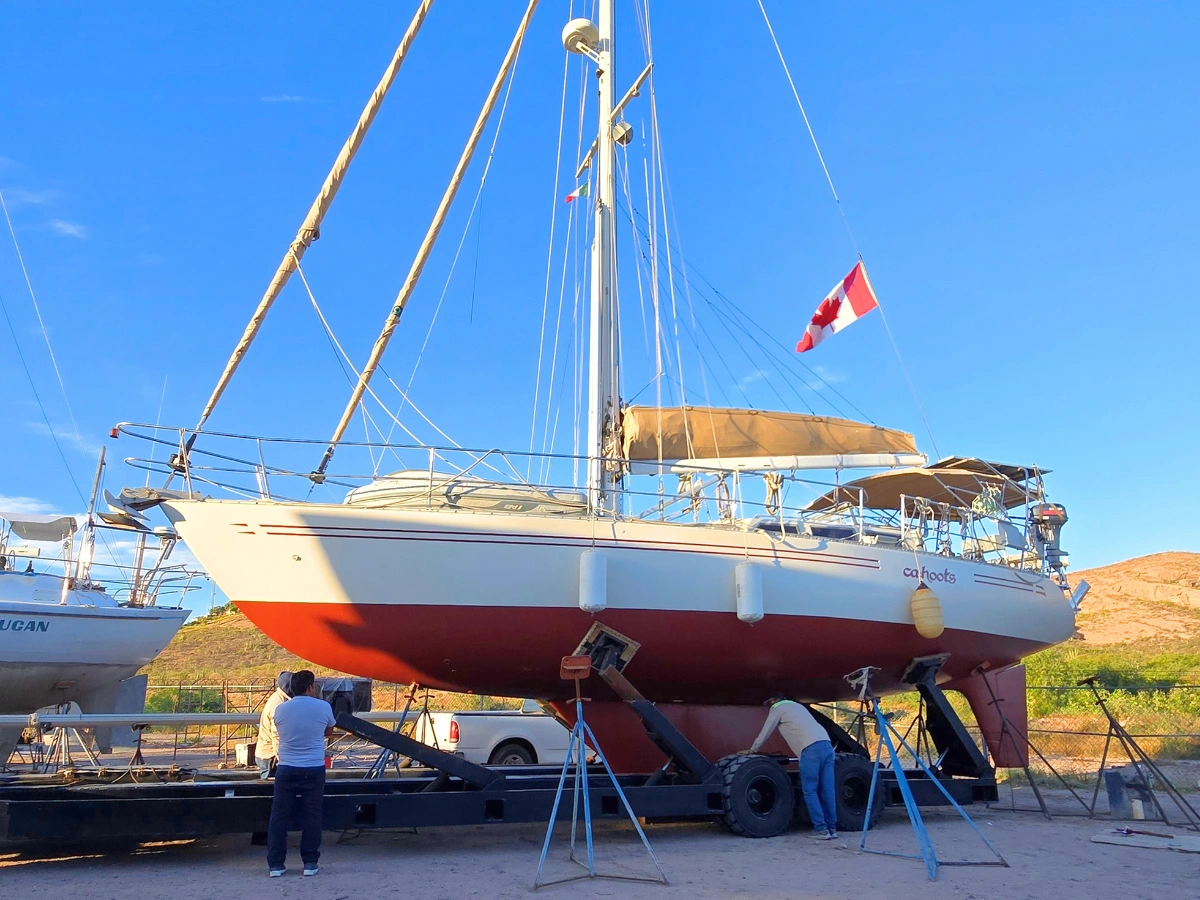
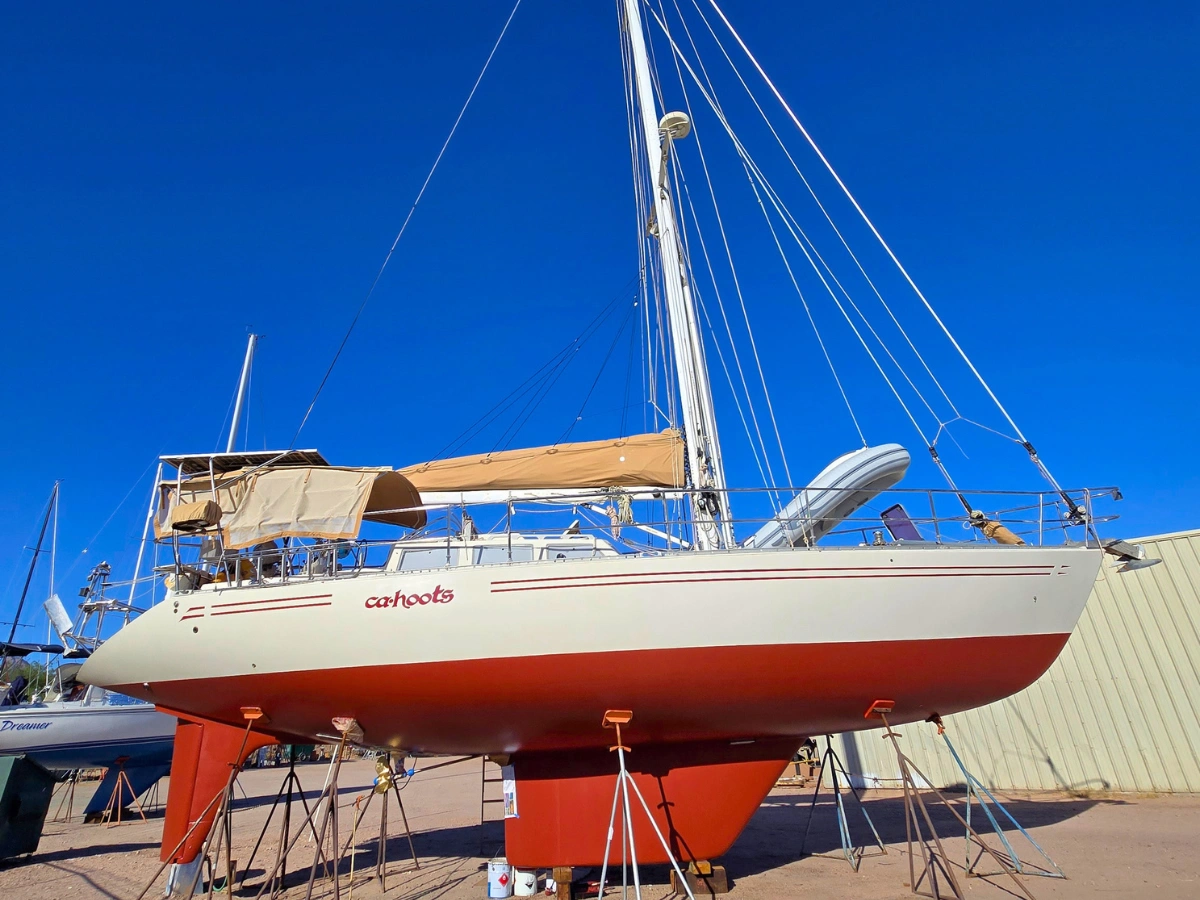
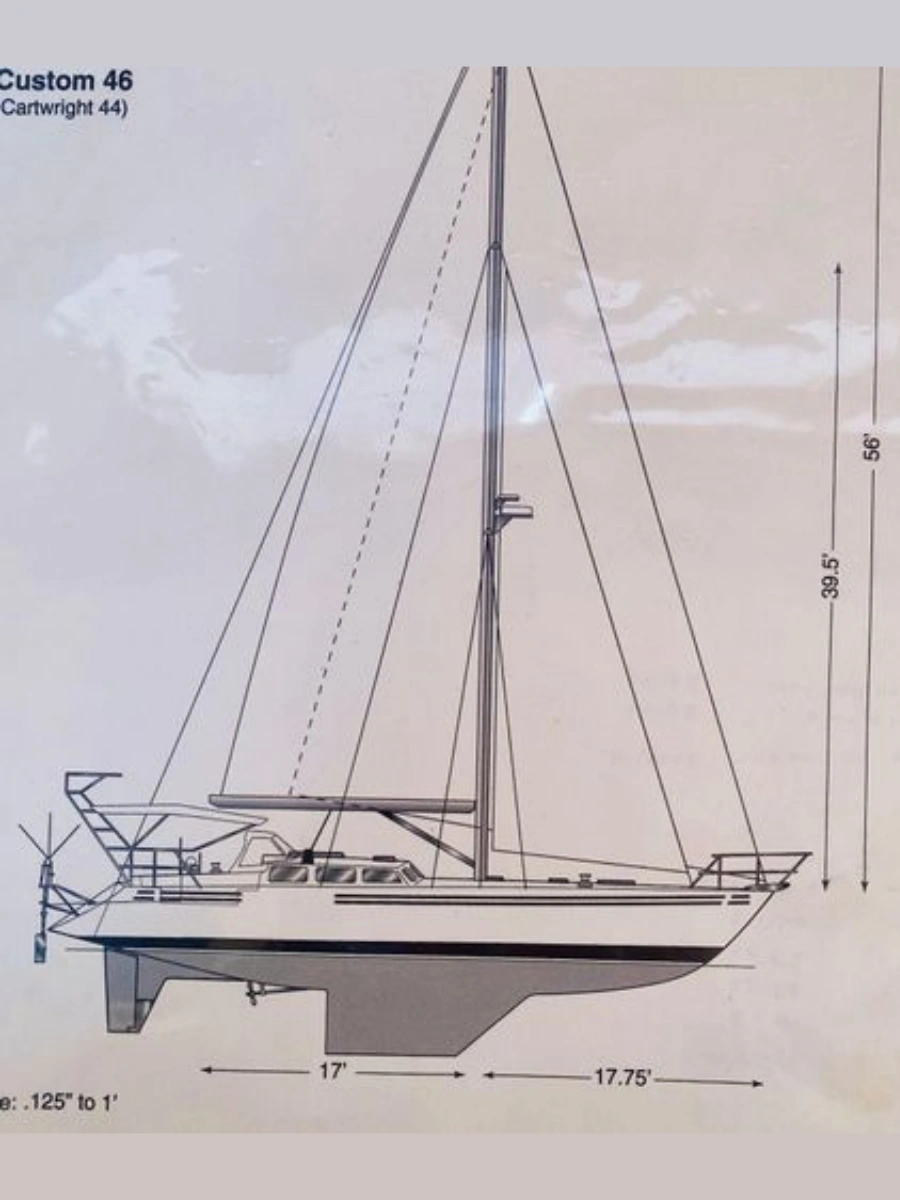
This 2000 Custom 46 is a custom-built pilothouse cutter by Jerry Cartwright, based off of his Cartwright 44 design, and commissioned by experienced offshore sailors who already knew exactly what they wanted from a long-distance cruising yacht. Rather than being adapted from a production platform, Cahoots was purpose-built around offshore practicality: a secure pilothouse, dual steering stations, conservative proportions, substantial ballast, a cutter sail plan, large tankage, abundant storage, and systems intended for extended passagemaking.
Her owners brought significant cruising experience to the project. After completing a circumnavigation from 1988 to 1991, they commissioned Cahoots in Ontario with the benefit of that real-world experience influencing the layout and equipment choices.
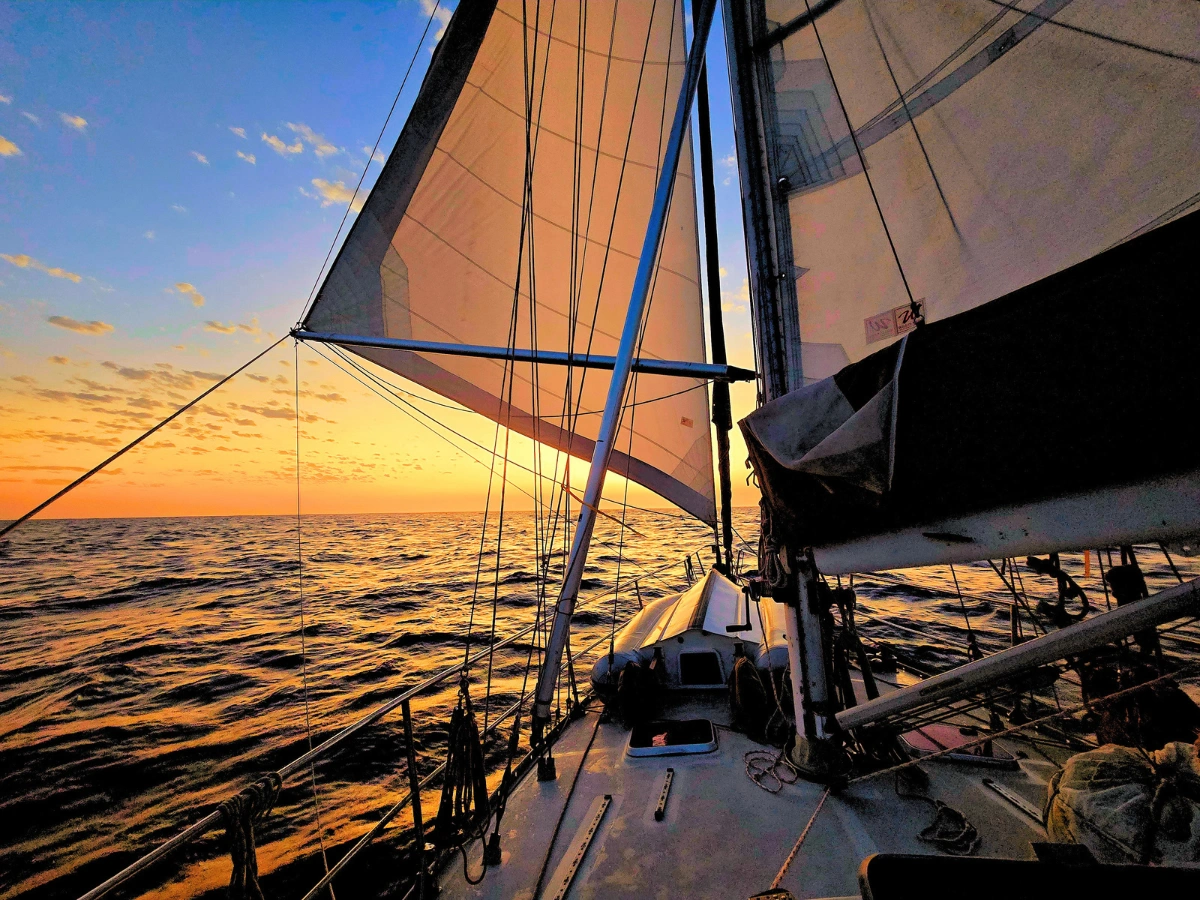
Cahoots is not simply outfitted as an offshore cruiser — she has already proven herself over thousands of miles. Departing Toronto in 2002, her sailing couple sailed south through Florida, Cuba, the Caribbean, and Venezuela before transiting the Panama Canal in 2004. From there, Cahoots continued into the Pacific, cruising extensively through the South and North Pacific, including Pitcairn Island, French Polynesia, New Zealand, Kiribati, the Marshall Islands, Hawaii, and the Canadian West Coast.
This history gives this vessel something difficult to replicate with equipment alone: a demonstrated record as a capable and comfortable ocean-going home.
At approximately 46 feet overall, Cahoots combines a conservative 12’4″ beam with roughly 24,000 lb of displacement and close to 10,000 lb of encapsulated lead ballast. The result is a substantial cruising platform built around stability and offshore manners rather than maximum interior living space. Her modified-fin keel and skeg-supported rudder complement the cutter rig, while approximately 905 sq.ft. of sail area provides a versatile sail plan for changing conditions.
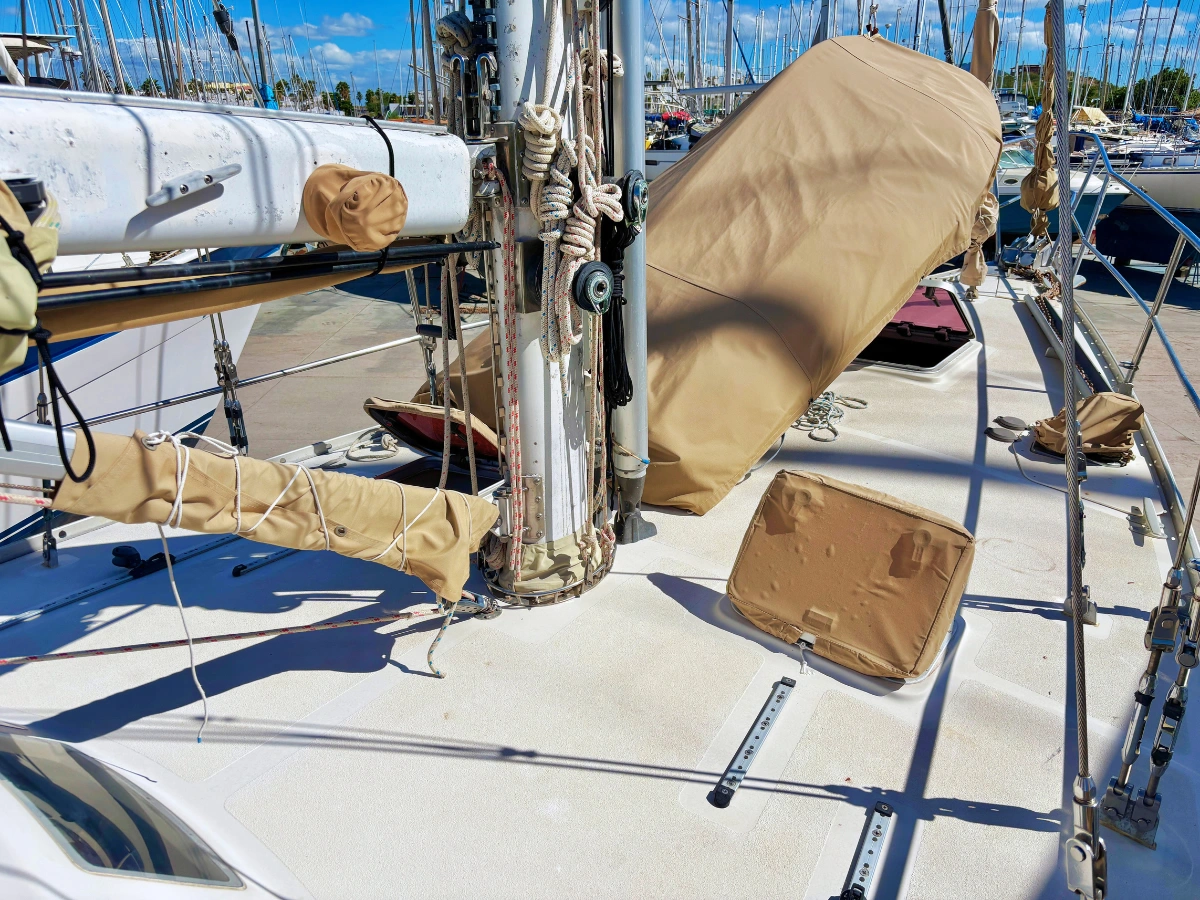
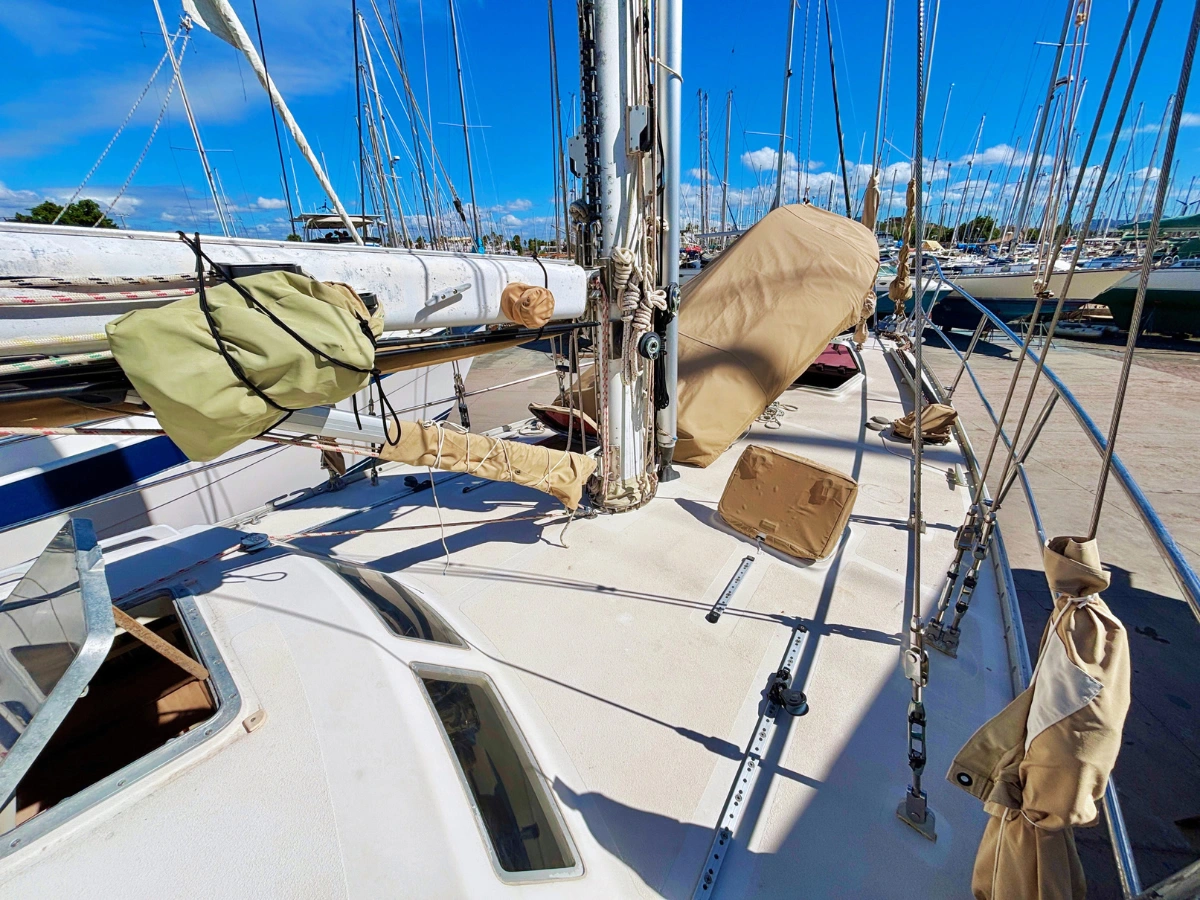
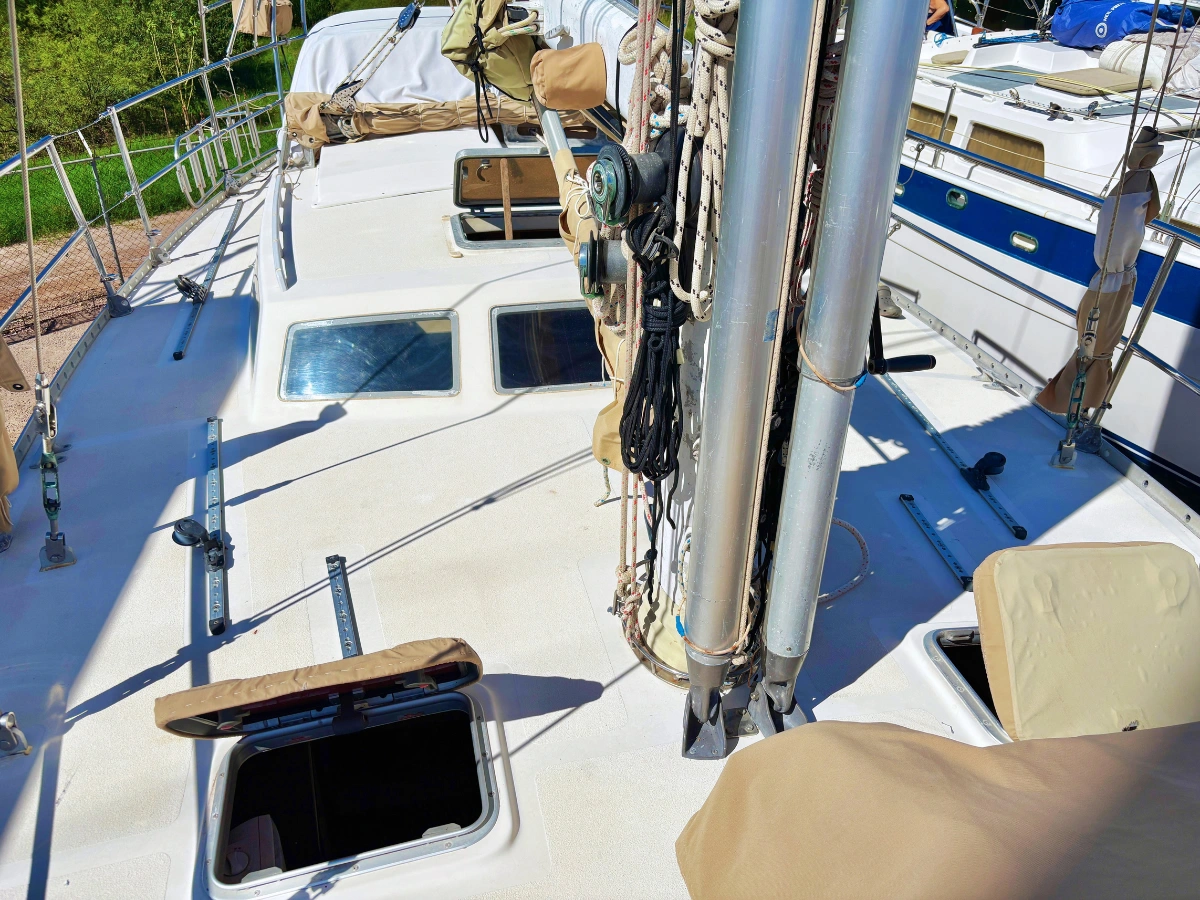
Cahoots carries an extensive sail inventory including mainsail, jib, genoa, staysail, cruising spinnaker, and storm mainsail. The mainsail is fitted with Harken Battcars and mast track, with two Lewmar extendable poles stored at the mast allowing for a diversity of sail plans. Seven Lewmar self-tailing winches and substantial Lewmar deck hardware provide a robust sail-handling package. And the stack-pack mainsail system and UV protection on the headsails simplifies sail management and helps extend sail life during extended cruising.
The standing rigging was replaced in 2010 and inspected again in March 2026, while one original aluminum stay chainplate was upgraded to stainless steel in 2023.
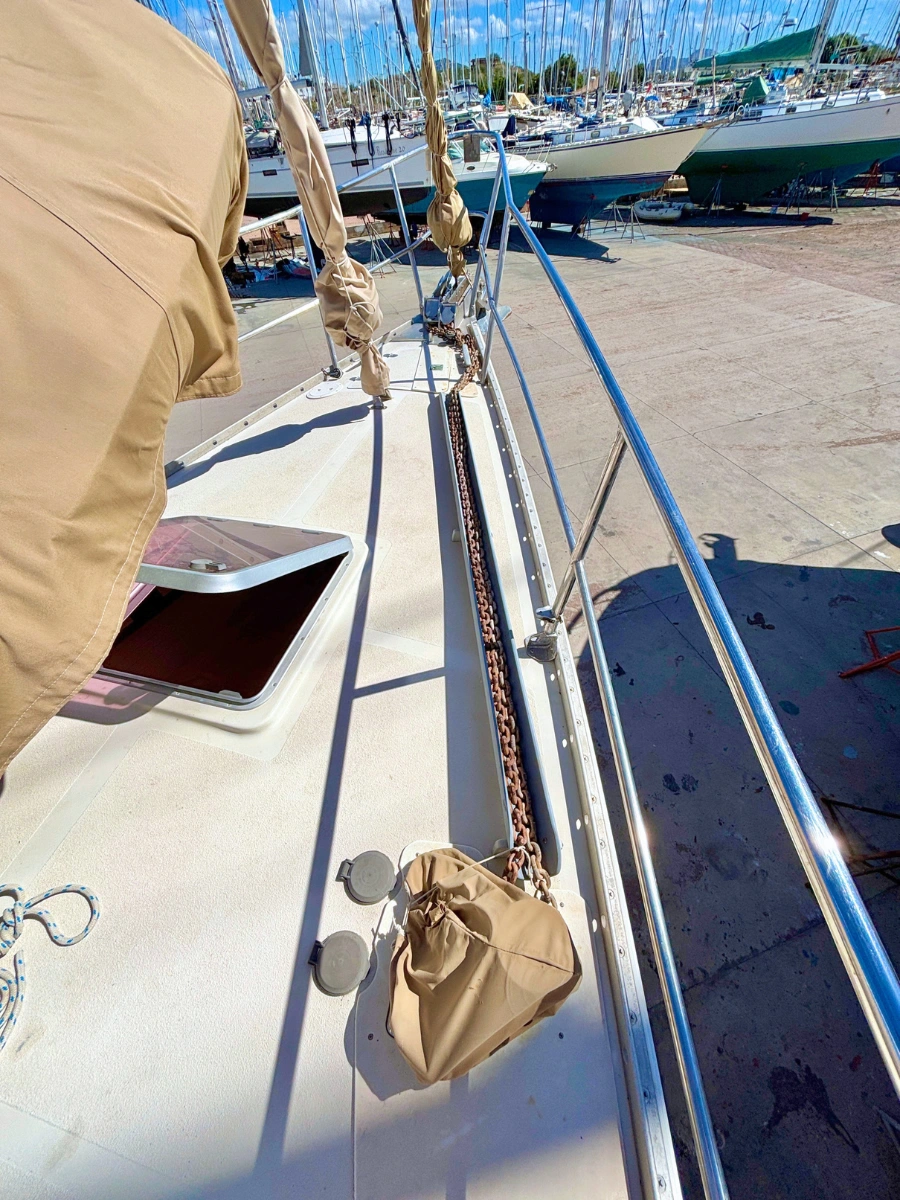
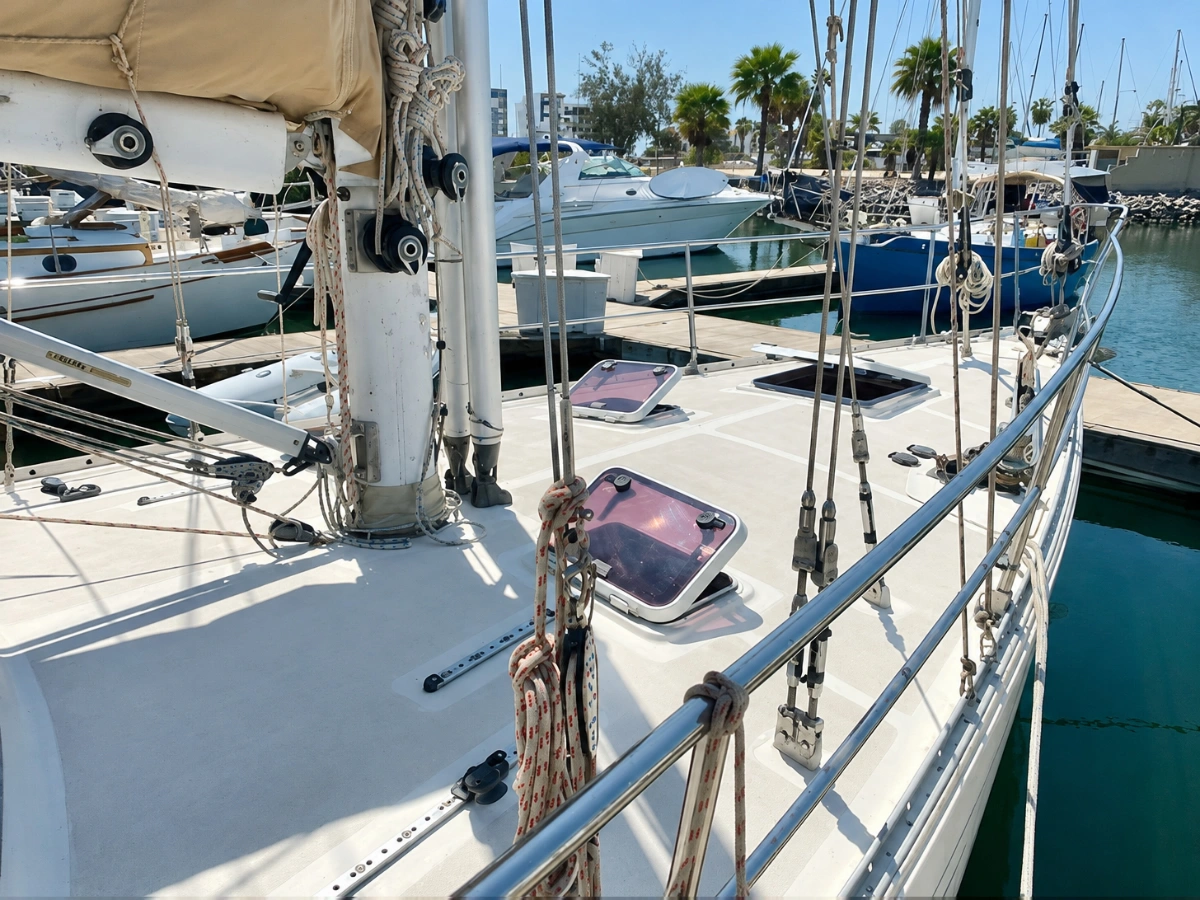
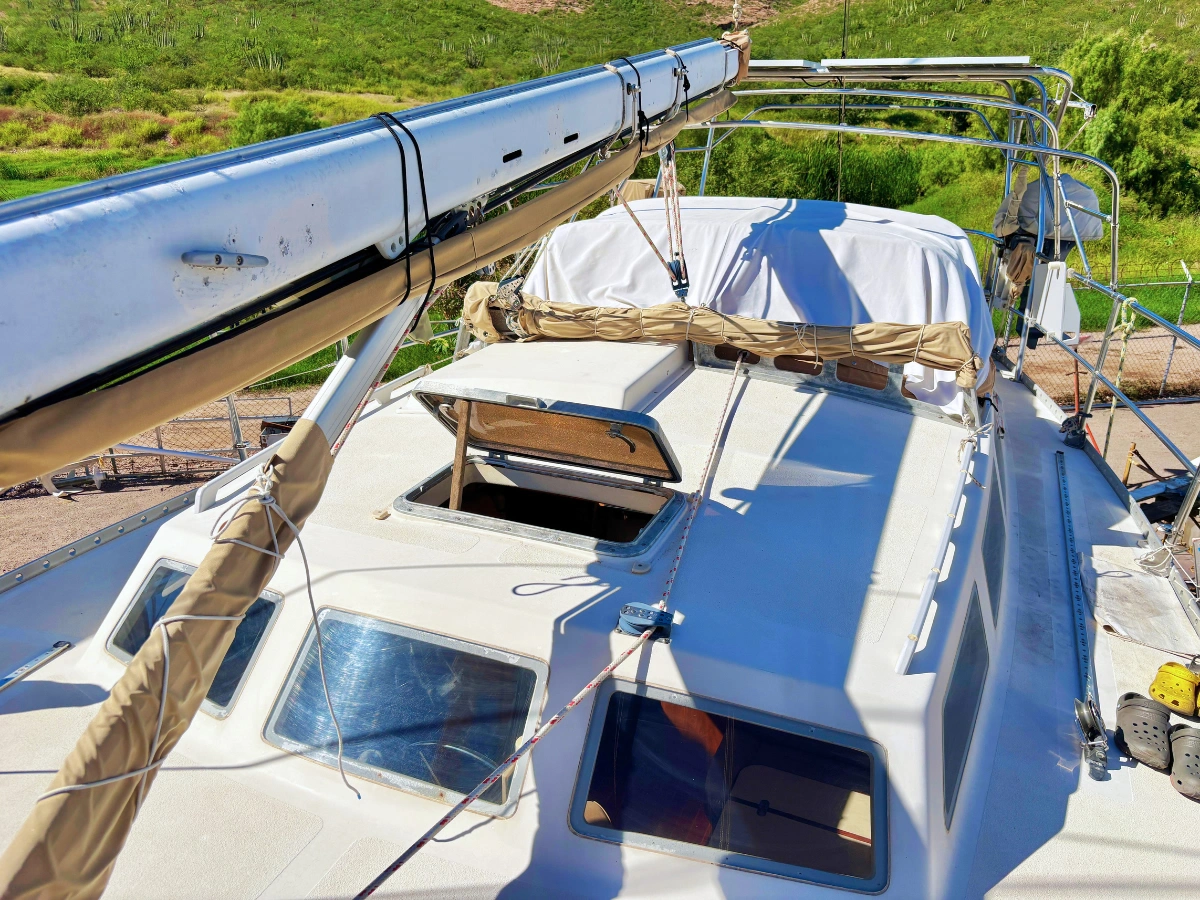
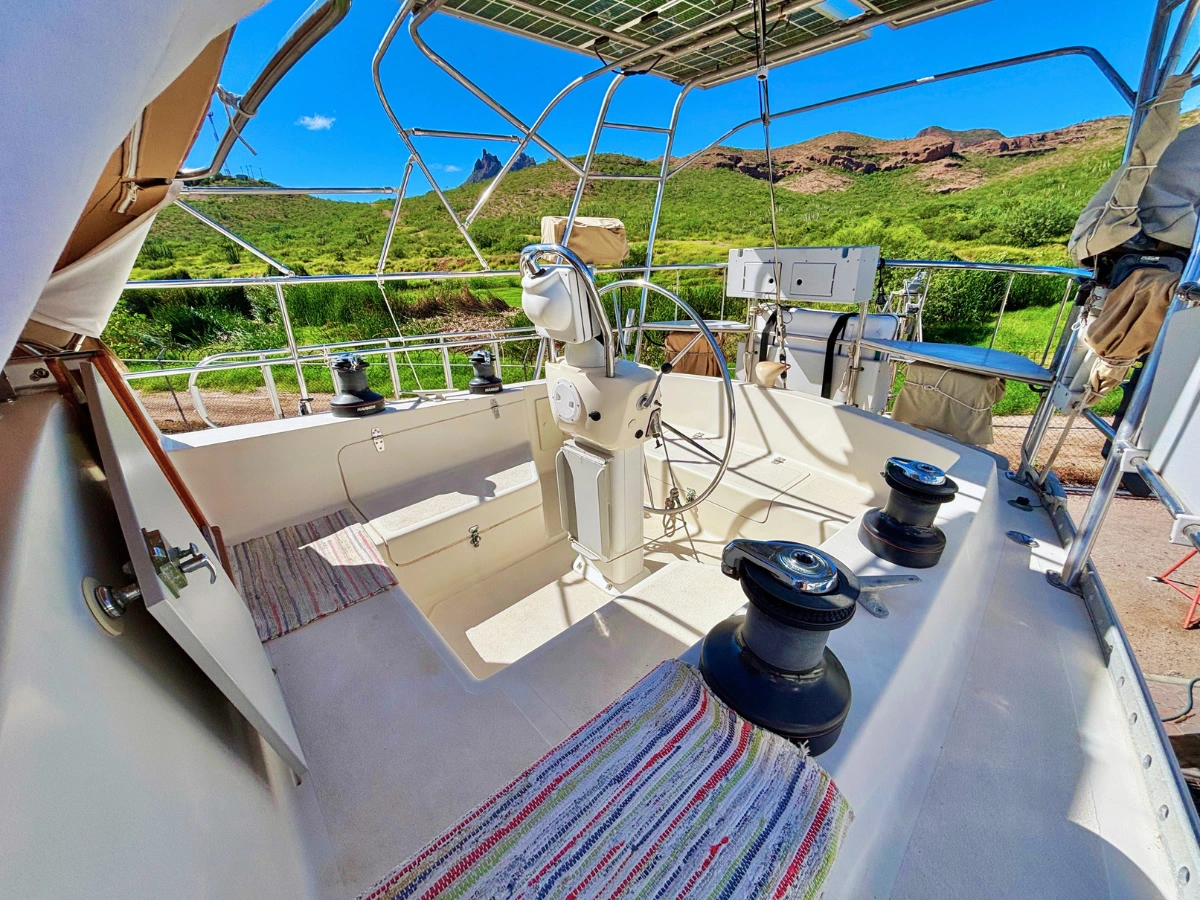
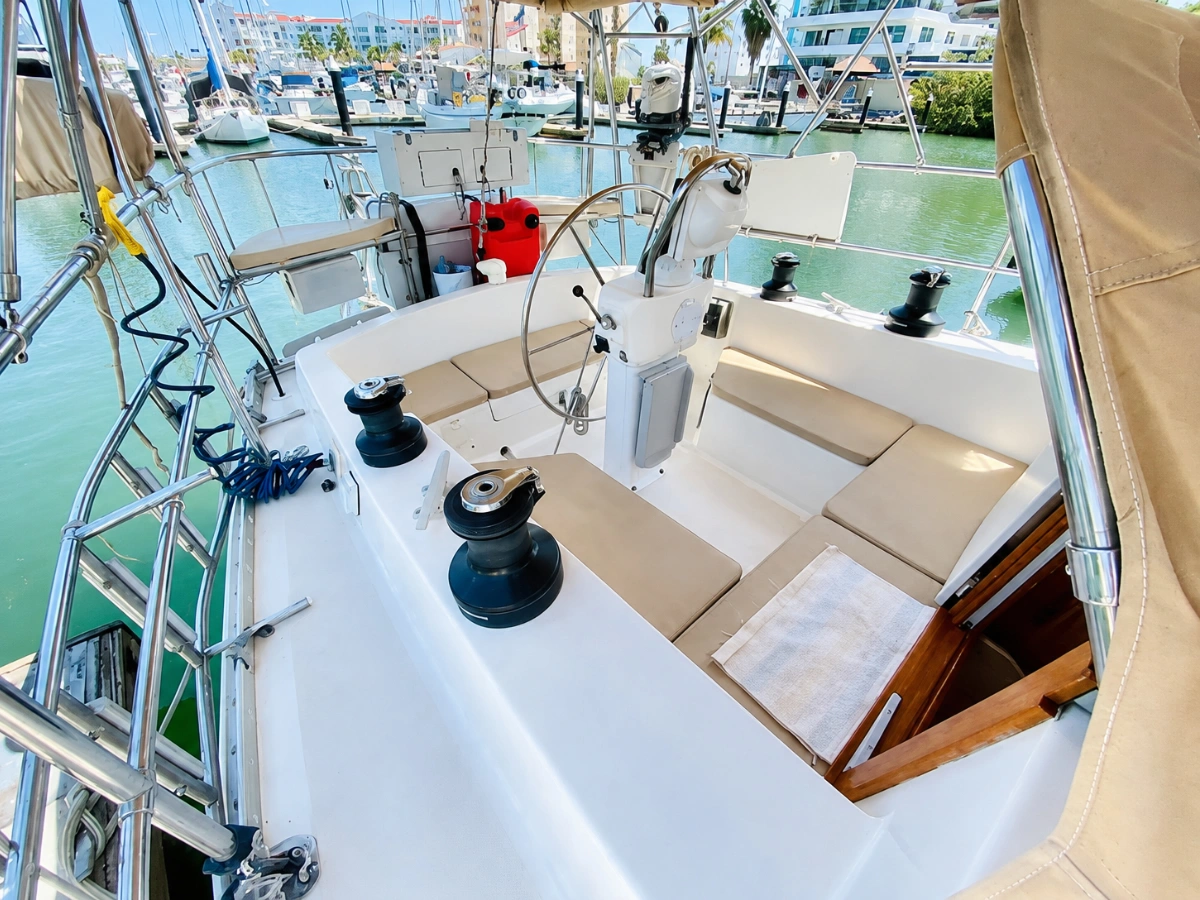
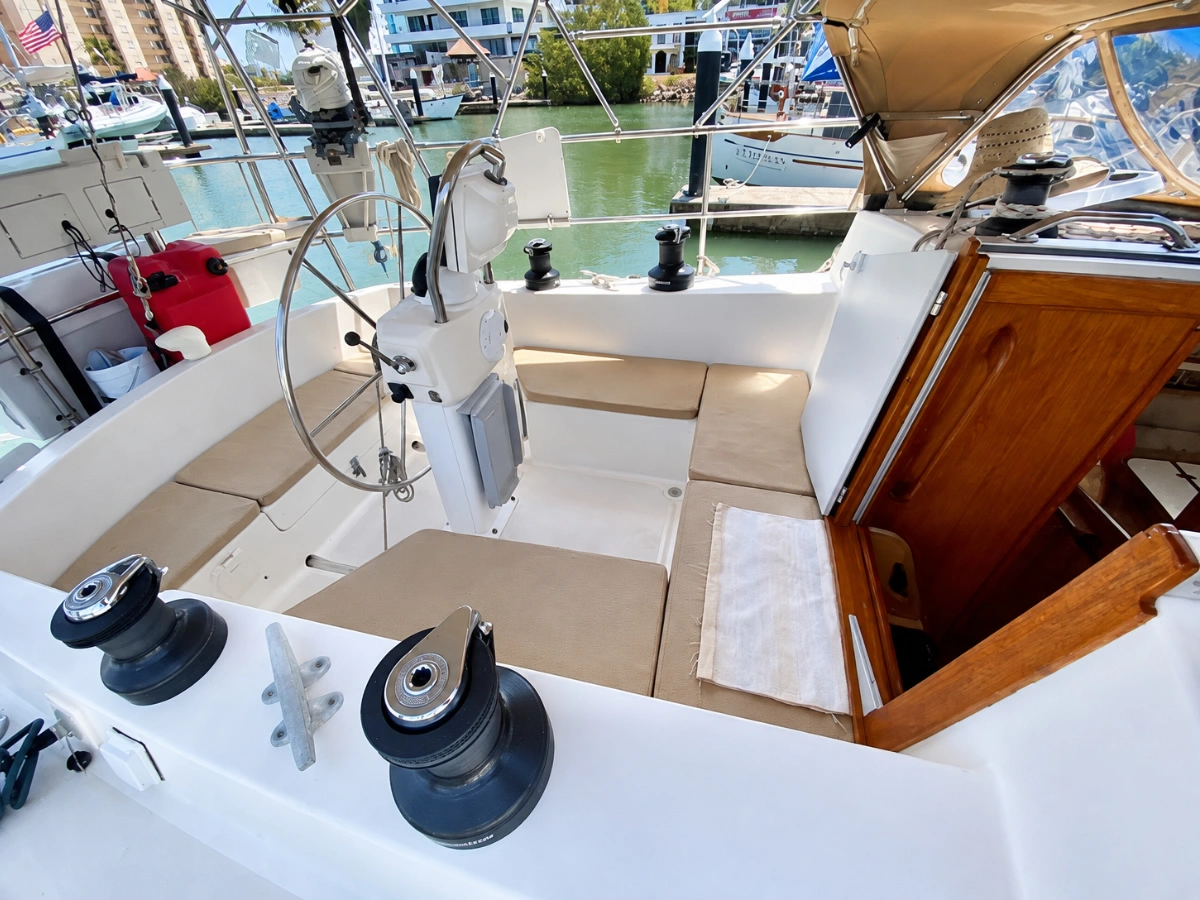
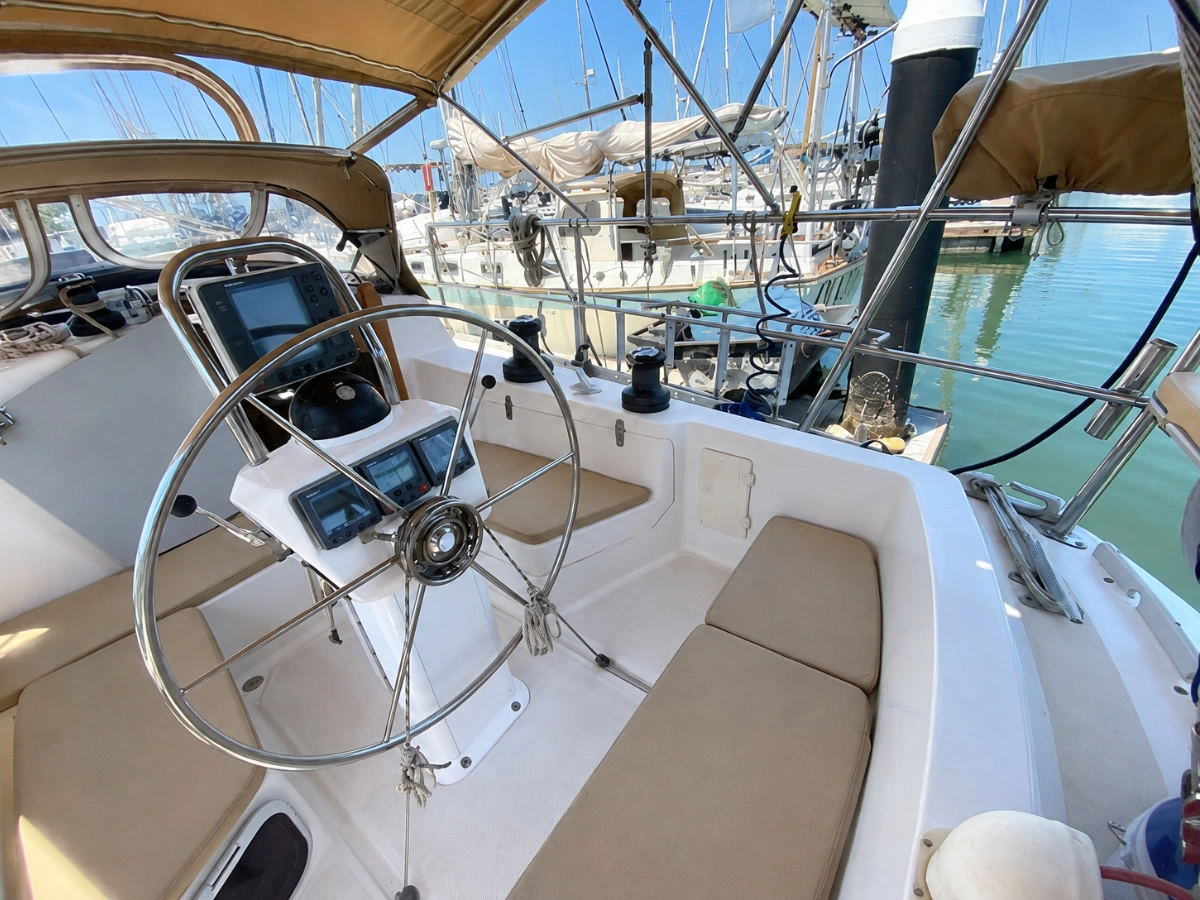
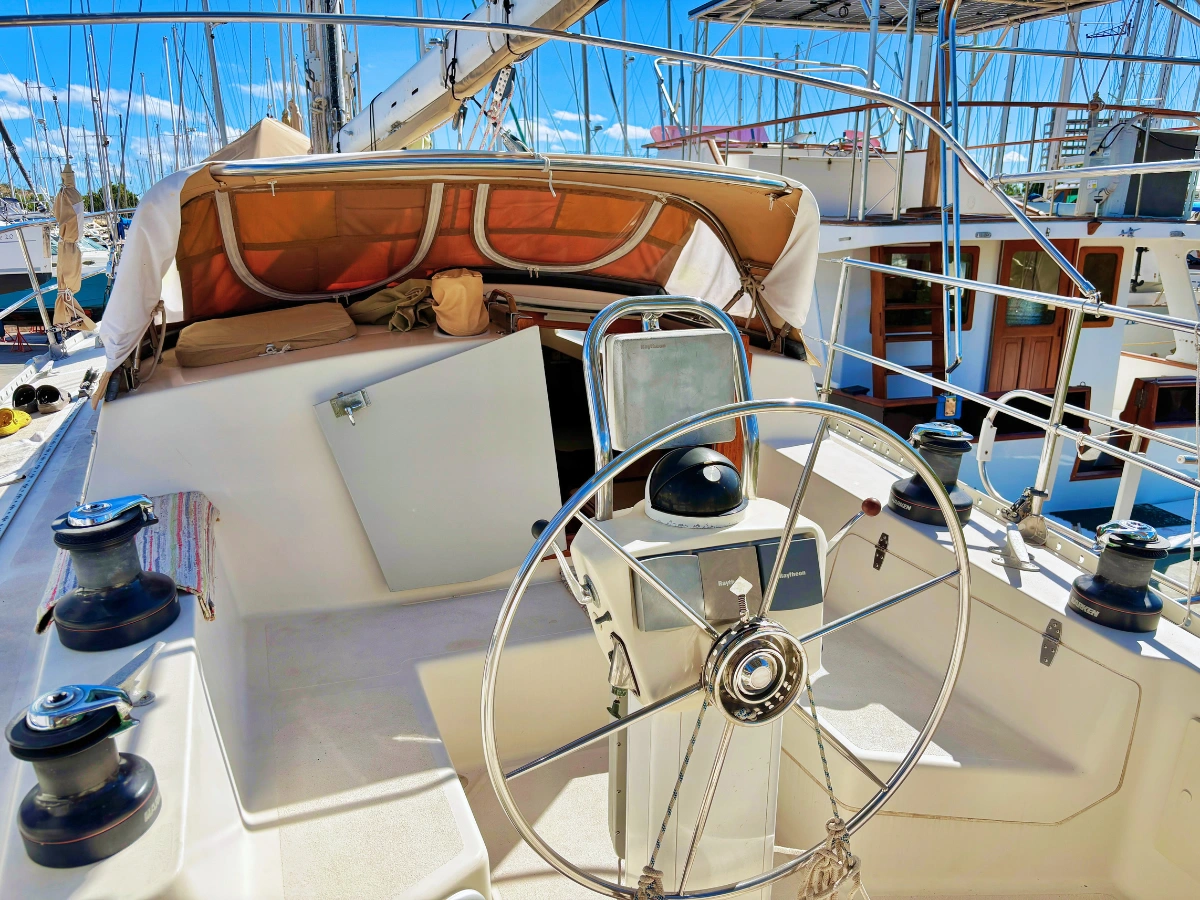
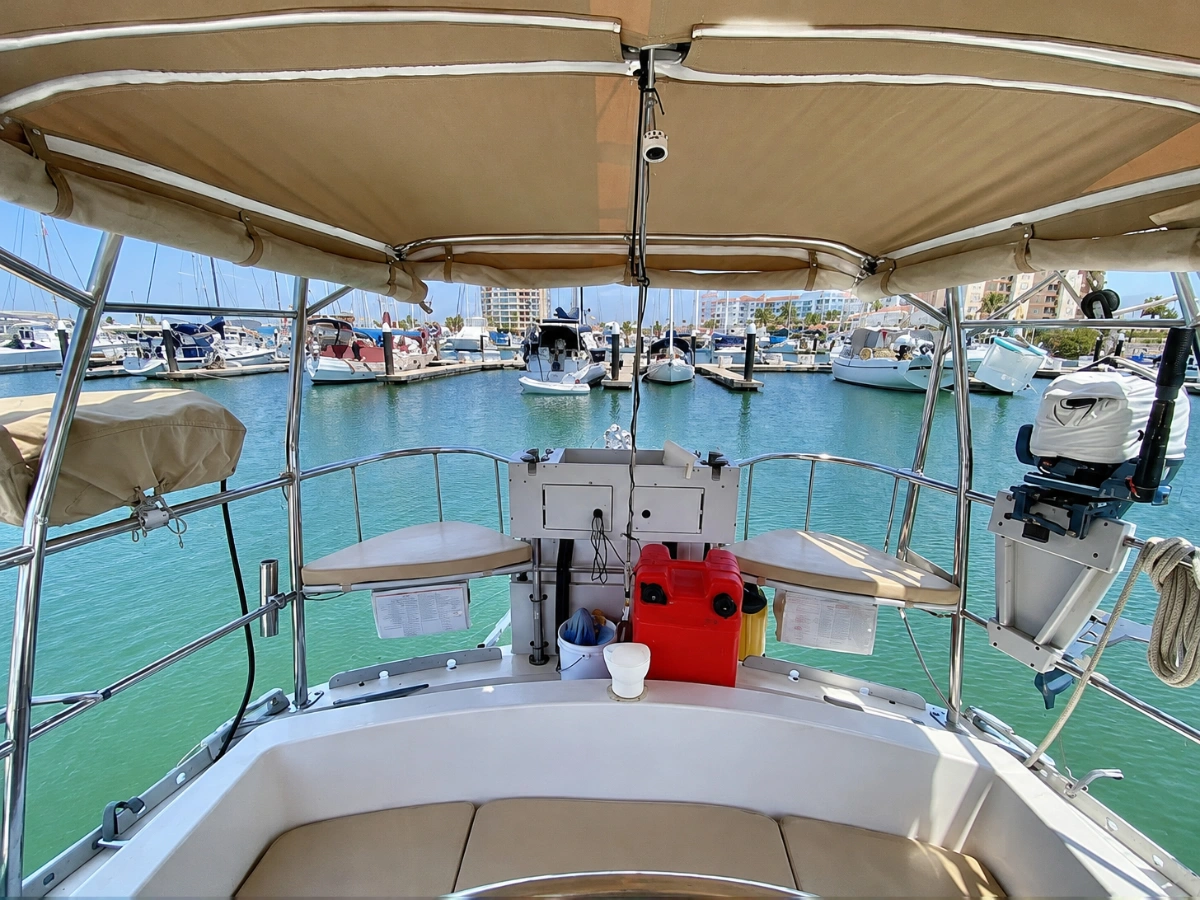
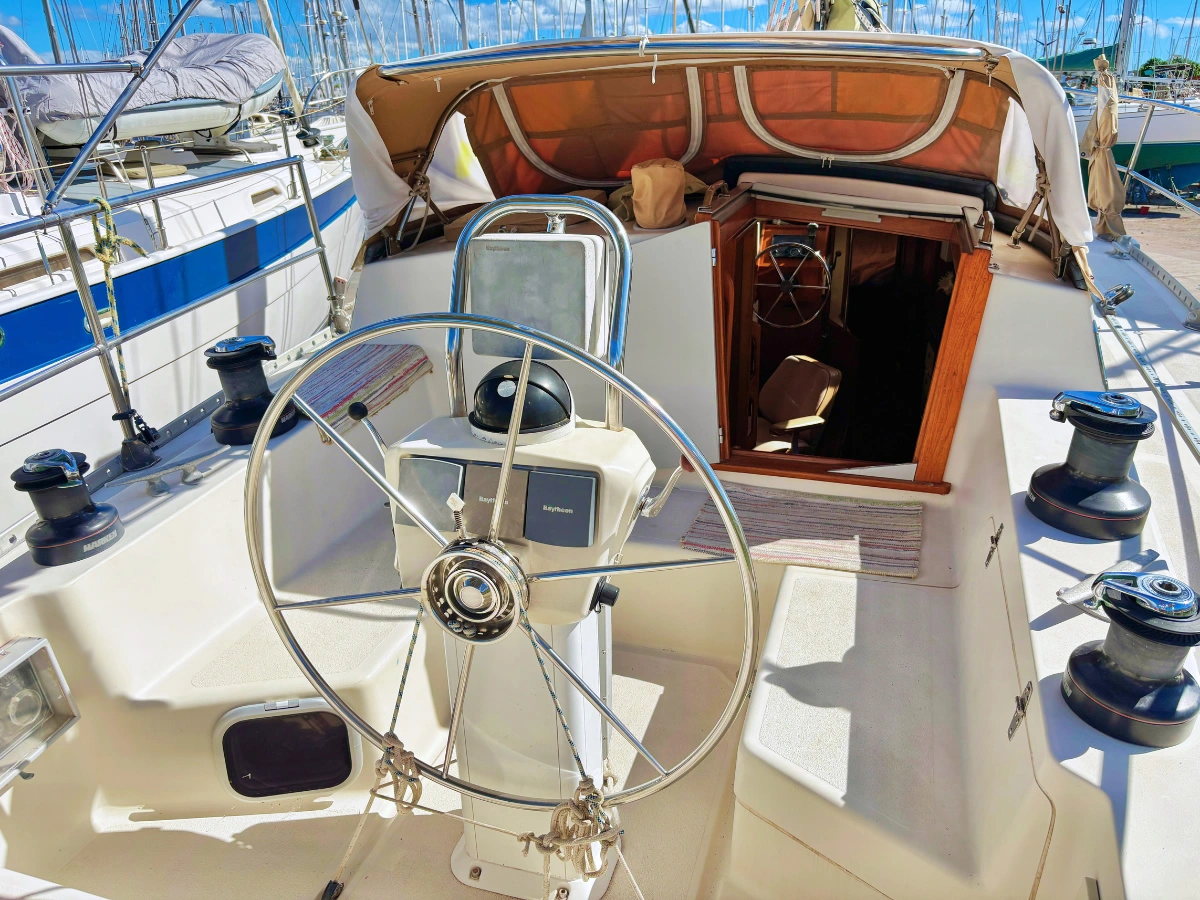
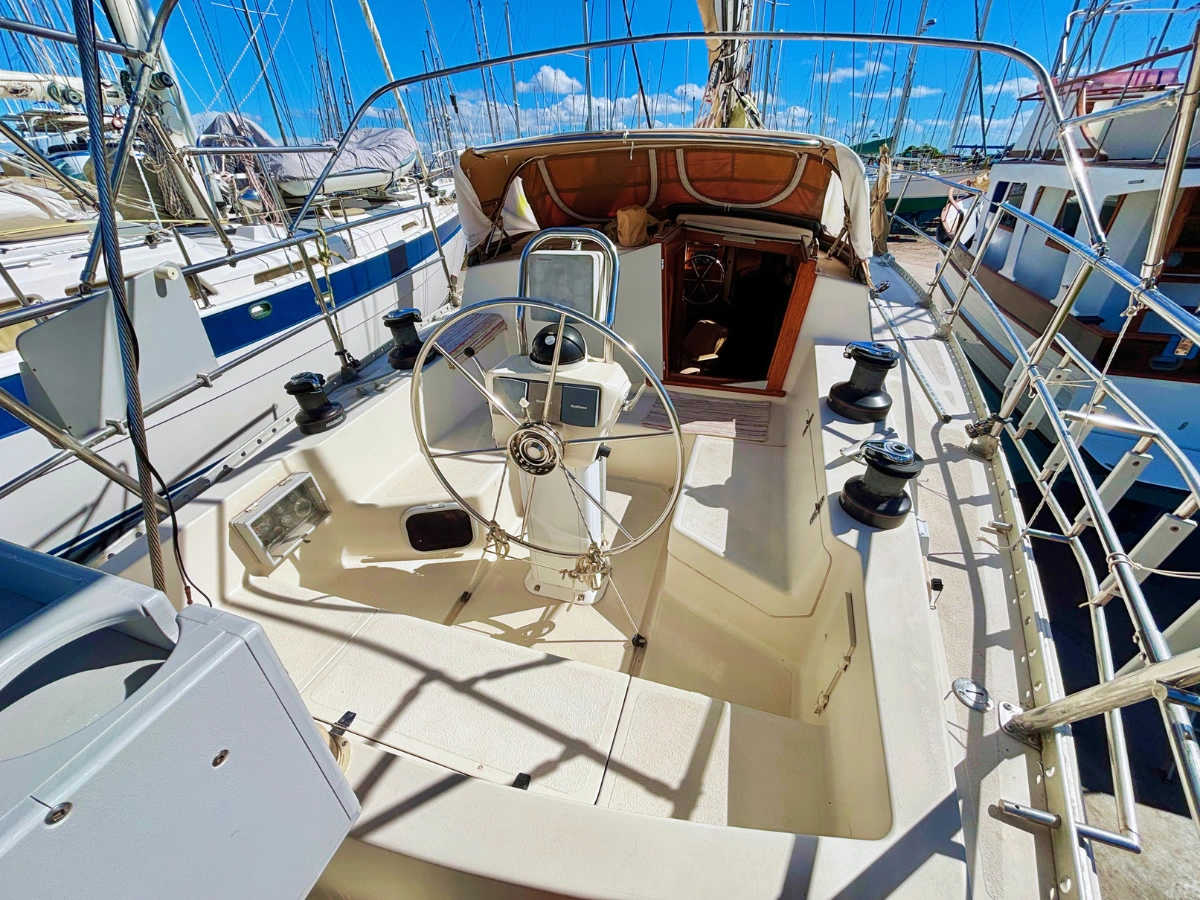
On deck, the deep horseshoe-shaped cockpit is surrounded by high coamings and provides a secure environment offshore. Large lazarettes beneath the seating offer useful storage for lines, fenders, and cruising equipment. Winches are positioned along the coamings for sail handling close to the helm. Forward of the cockpit, the deck remains broad and relatively flat, making movement along the vessel straightforward. Six opening Lewmar deck hatches provide ventilation below, while the aluminum toerail and full-perimeter stainless-steel rail system add security when moving fore and aft.
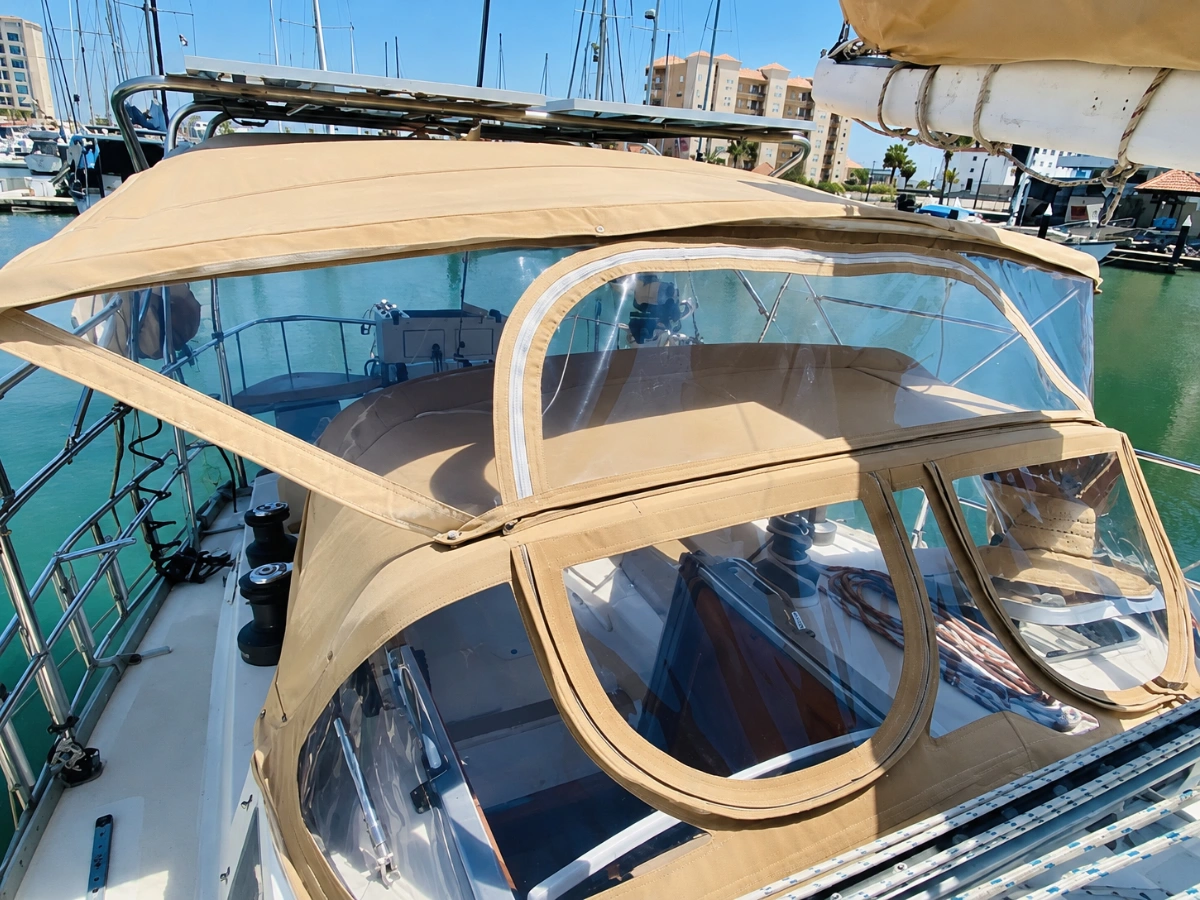
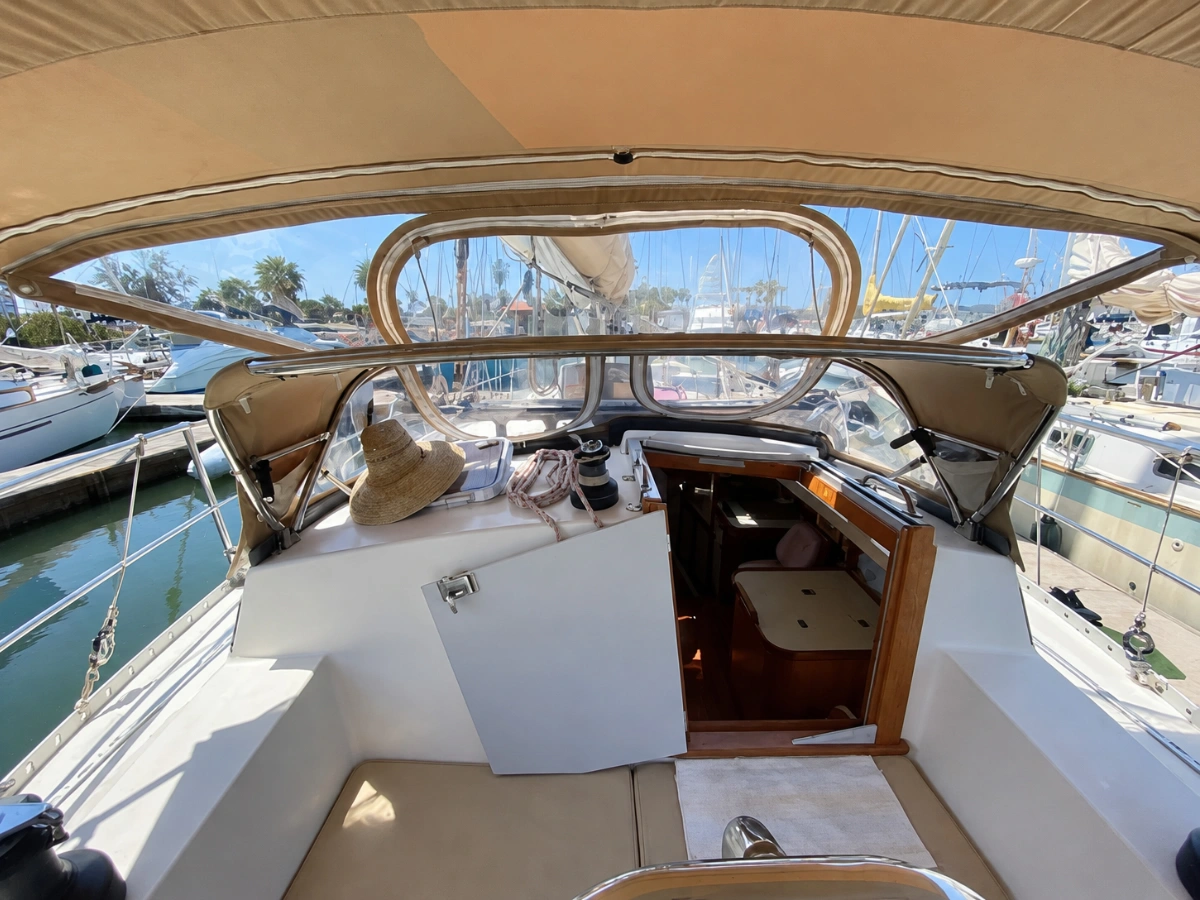
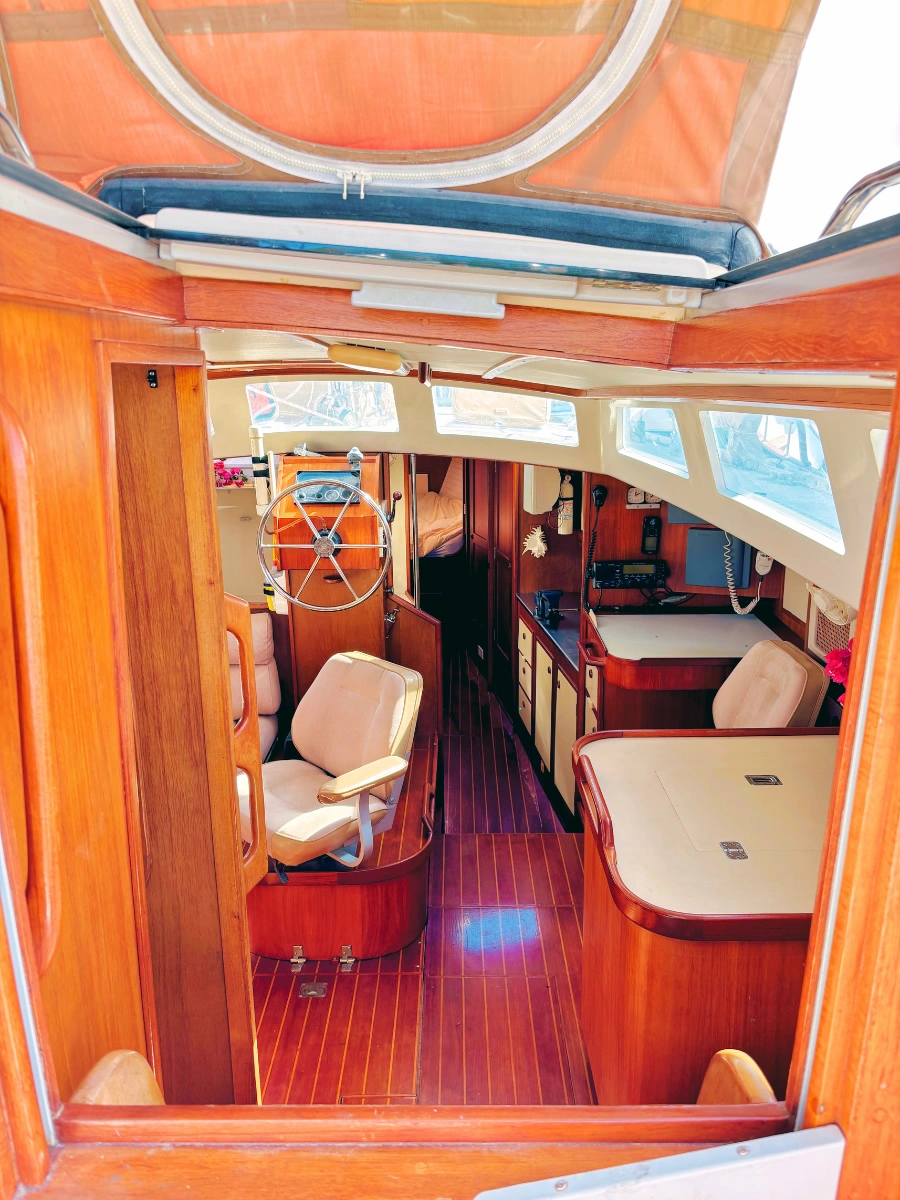
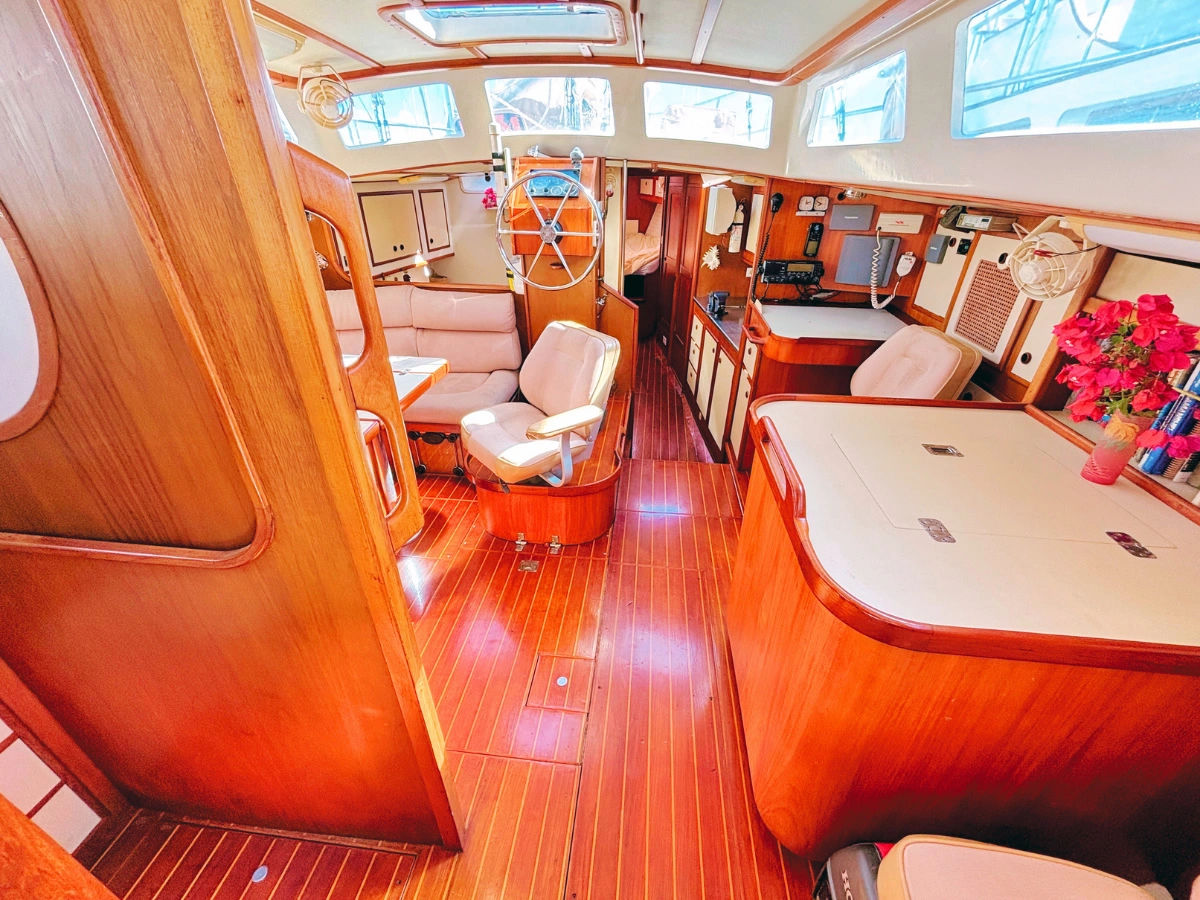
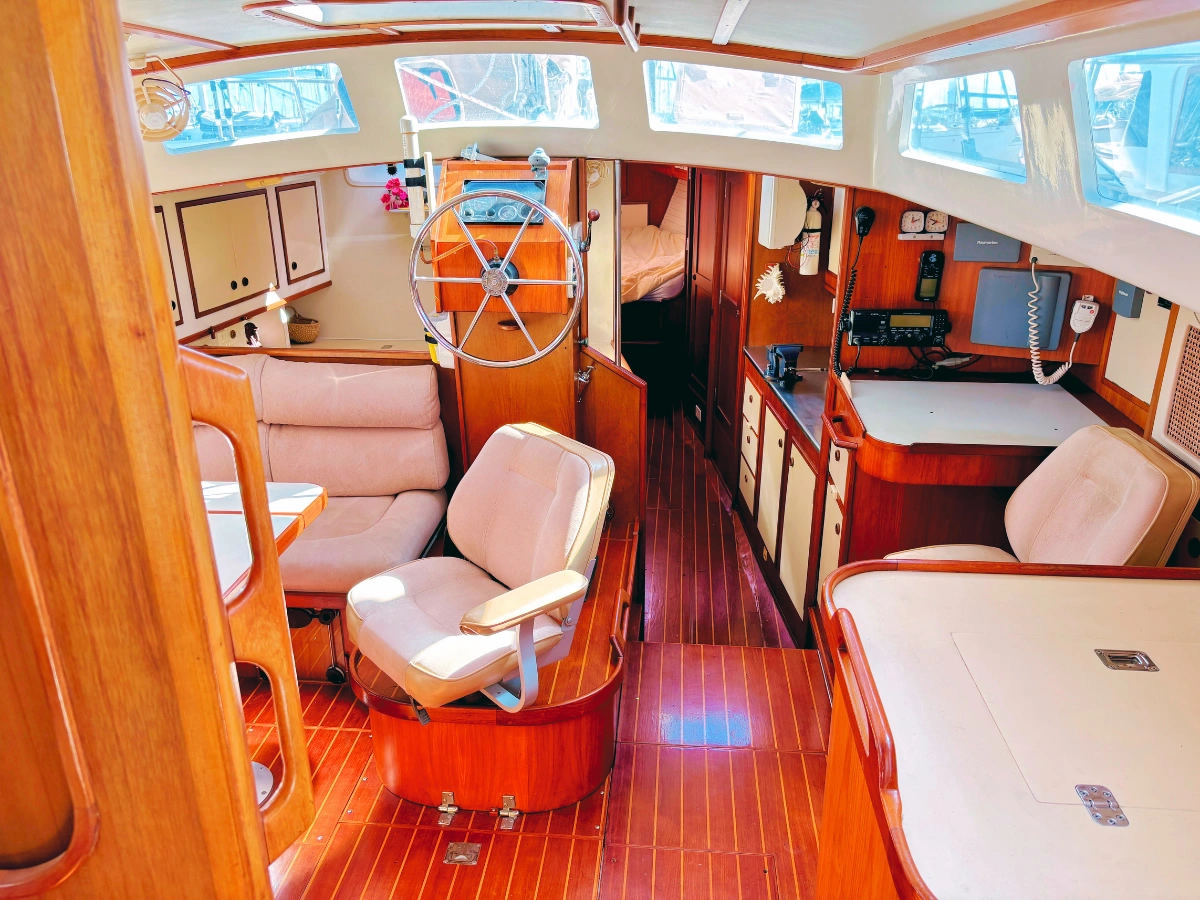
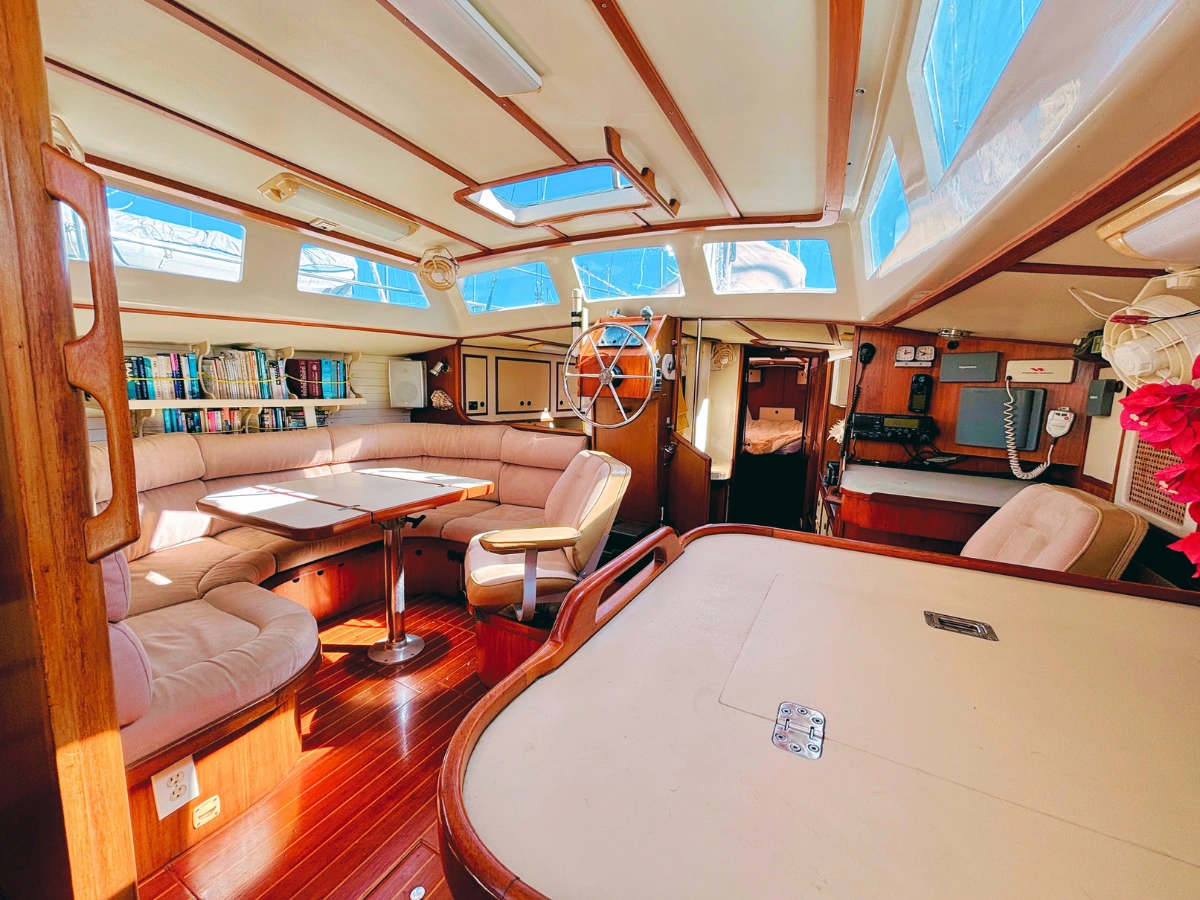
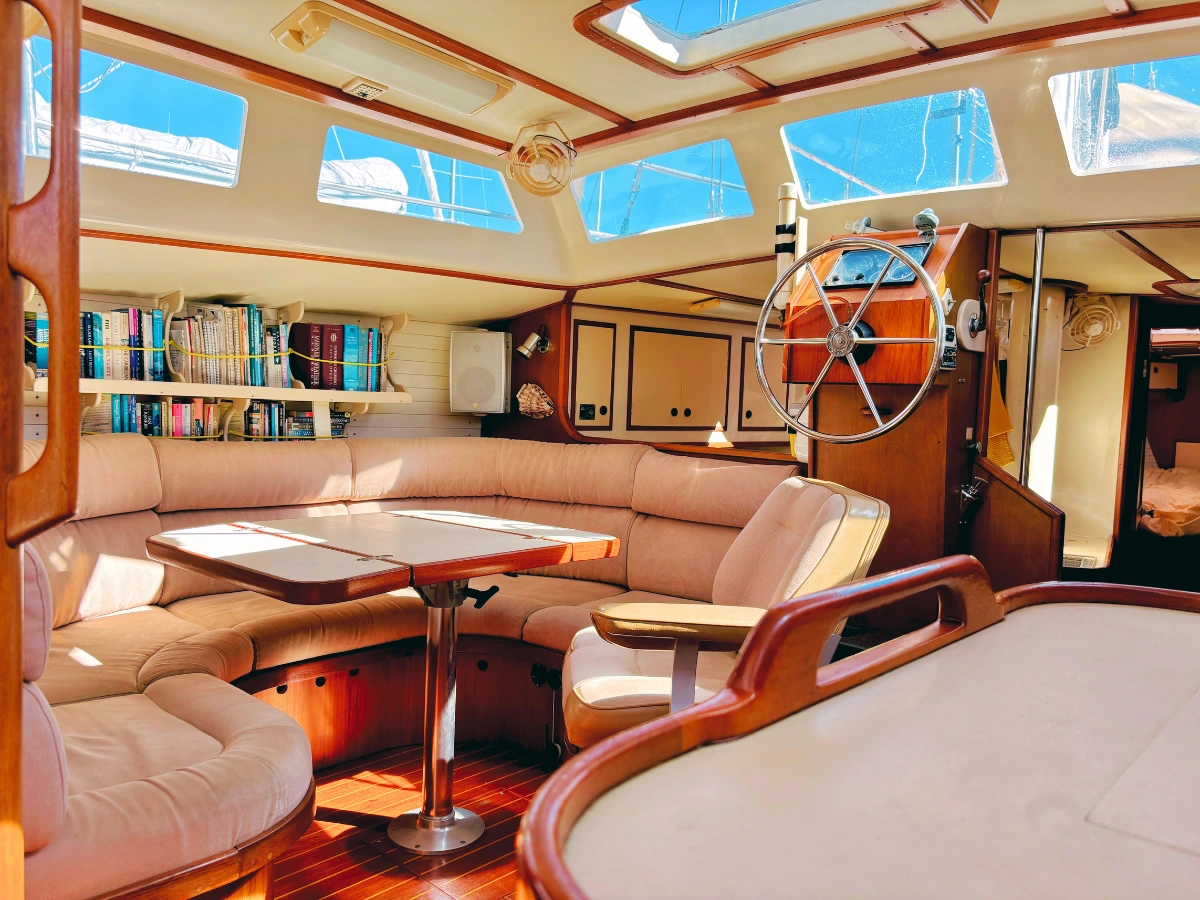
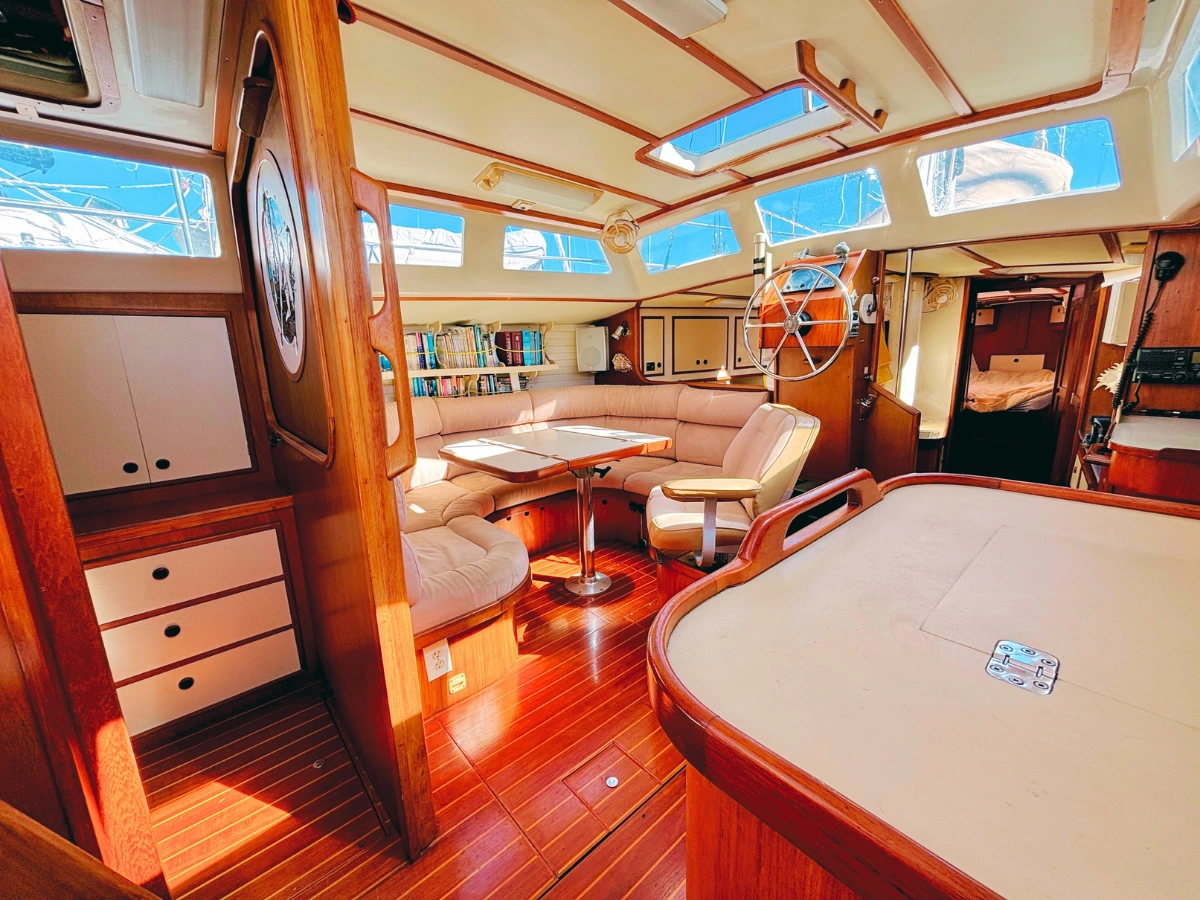
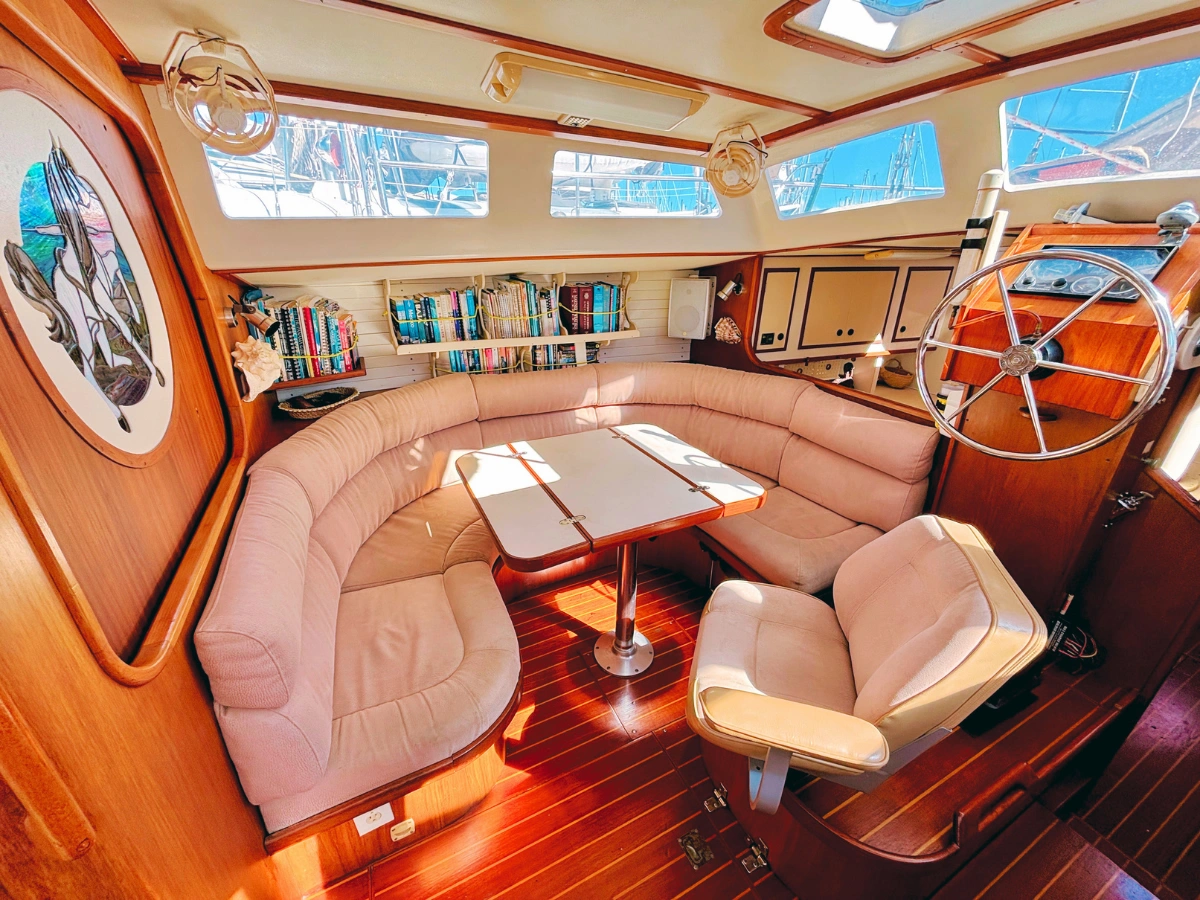
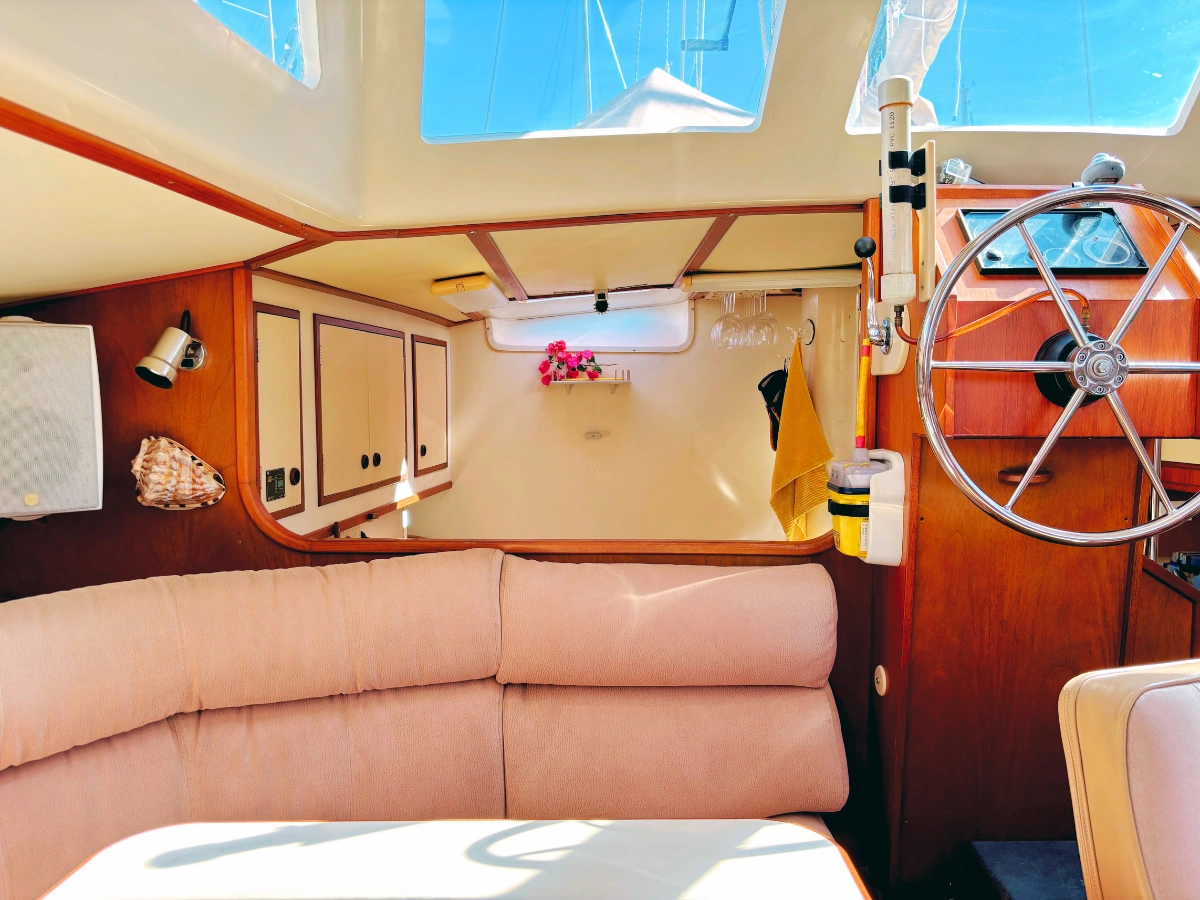
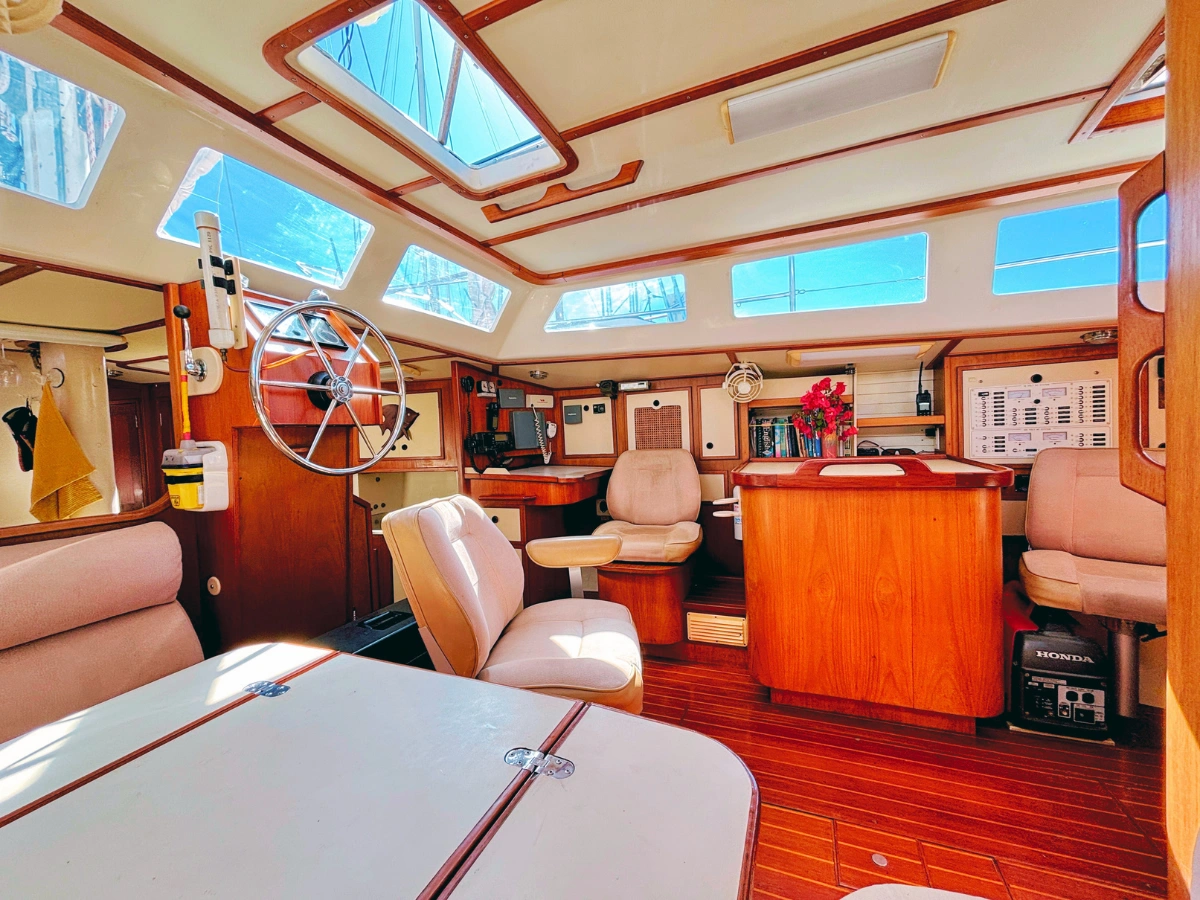
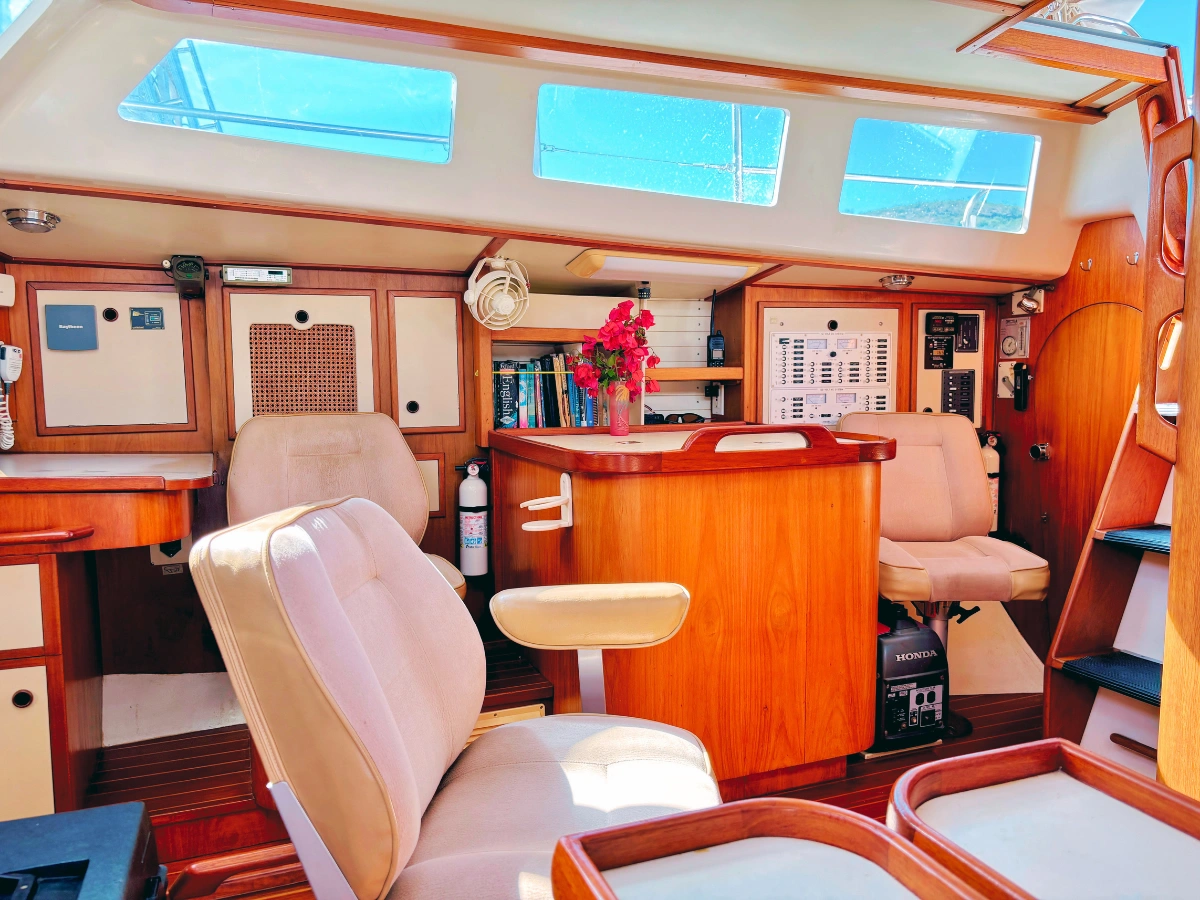
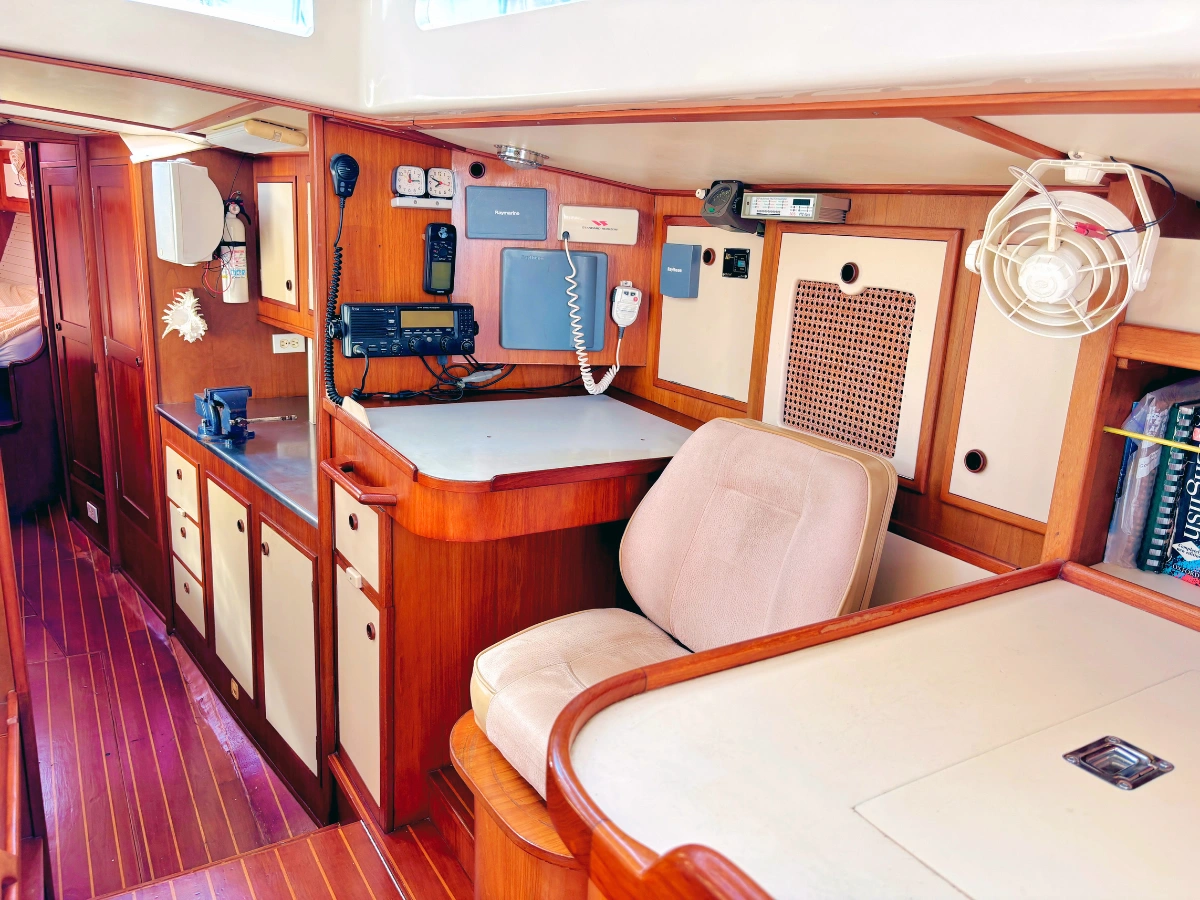
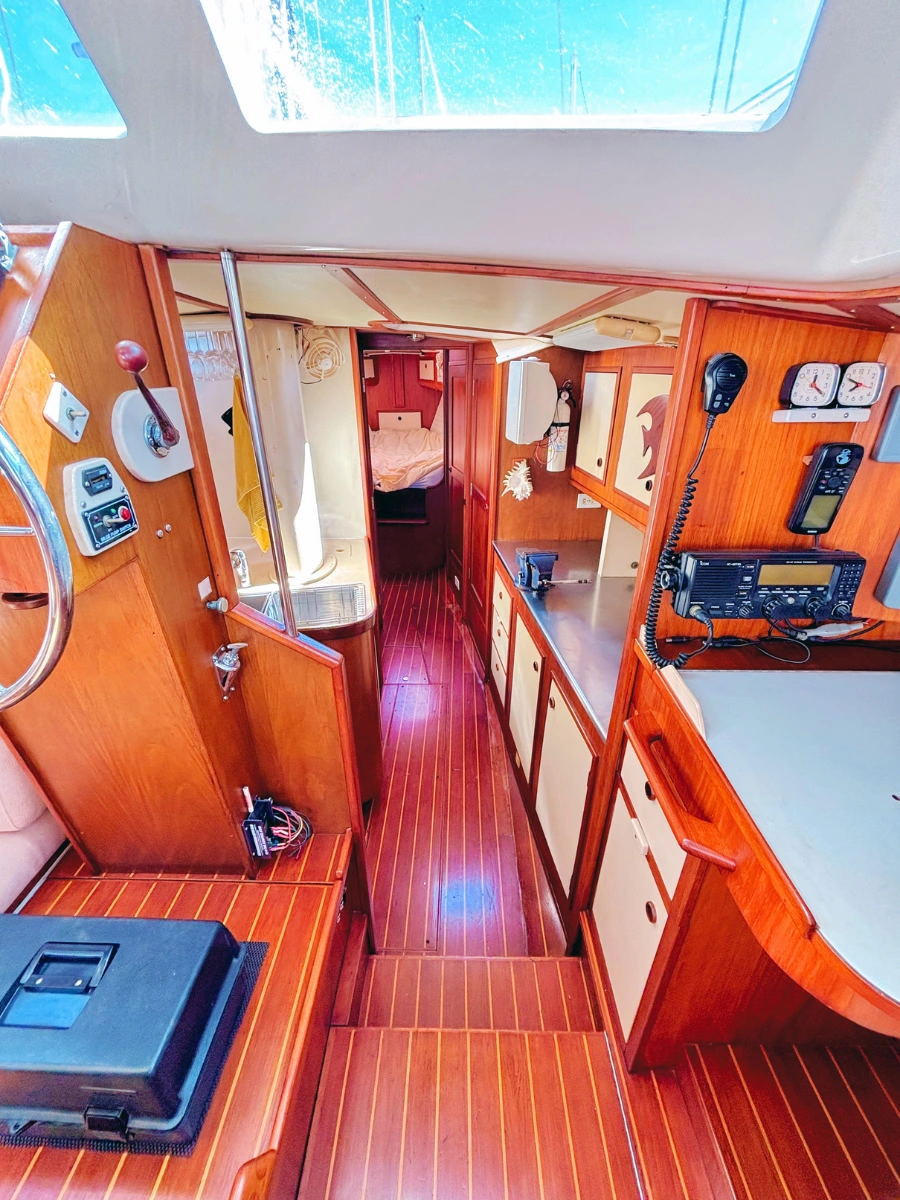
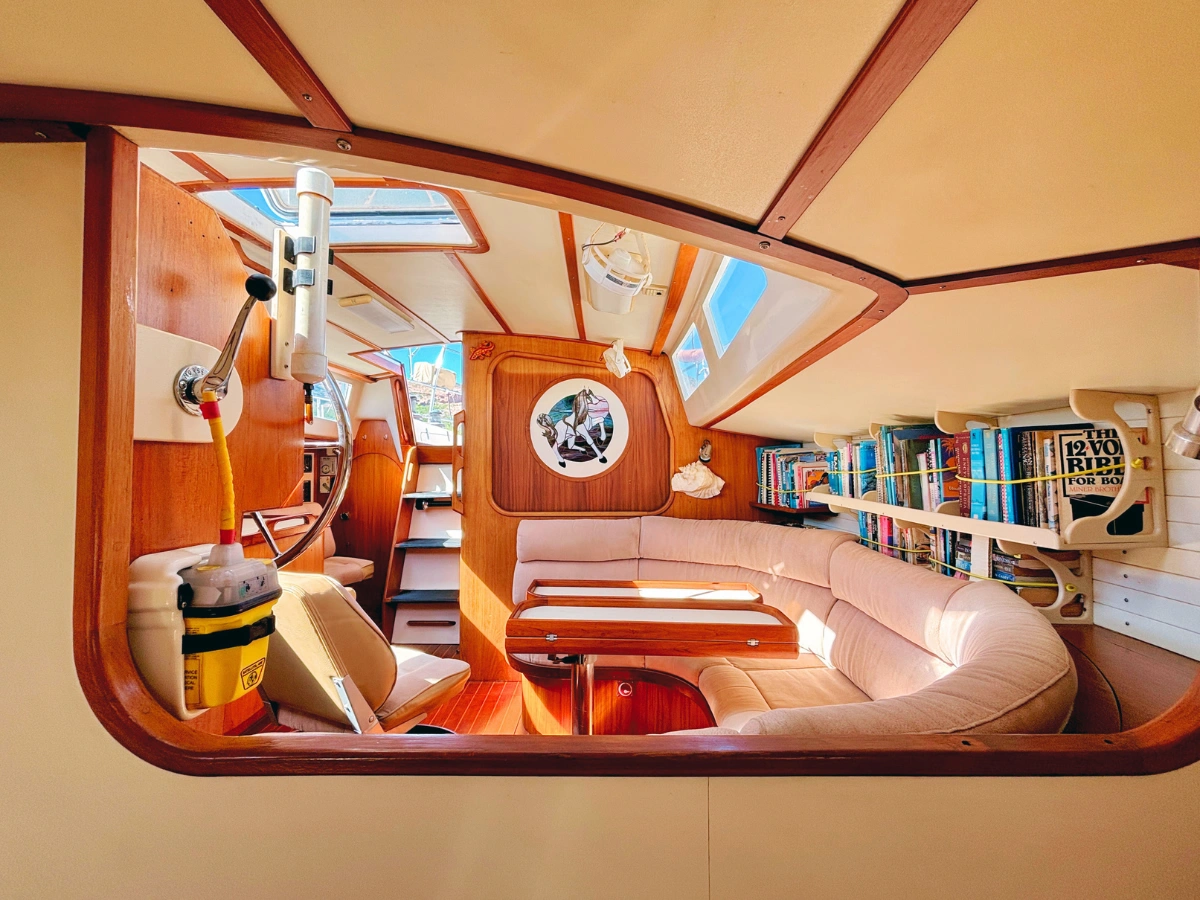
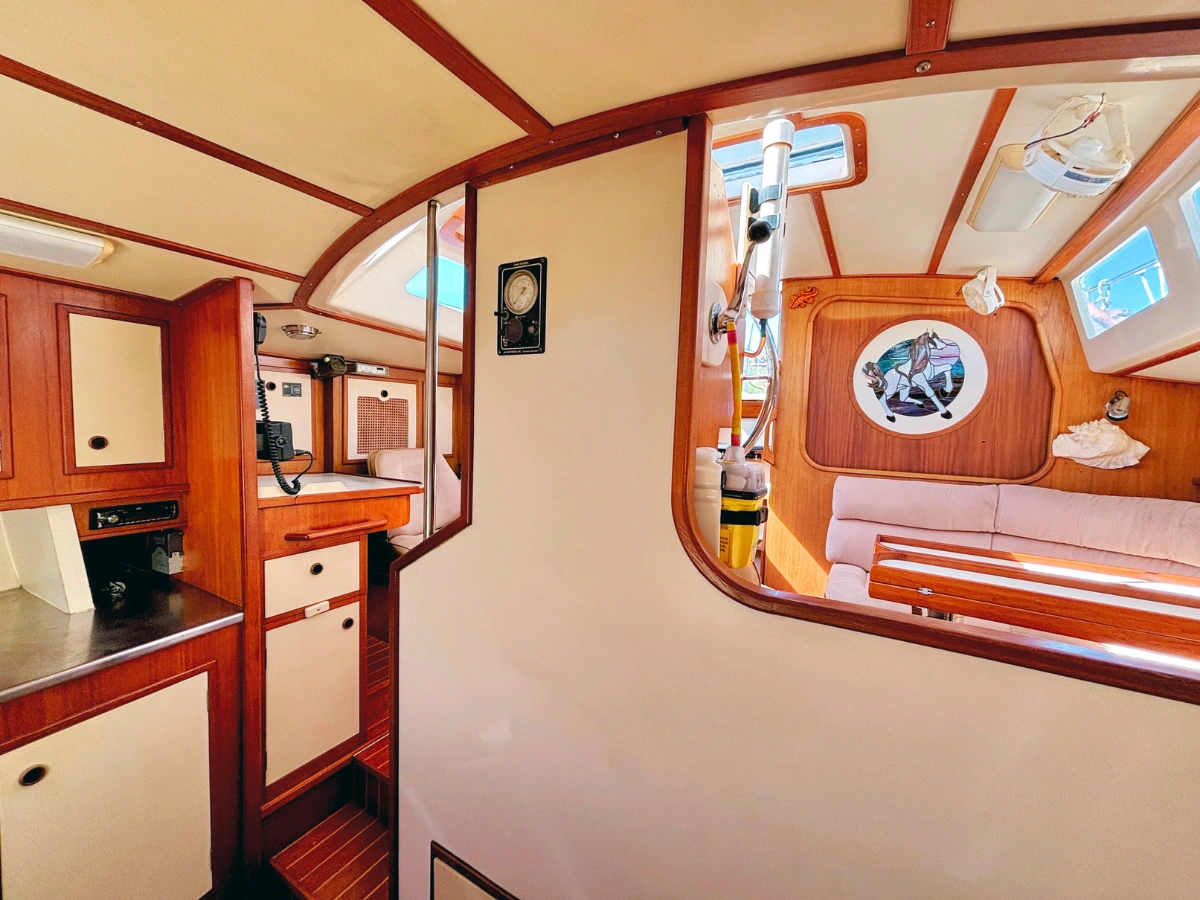
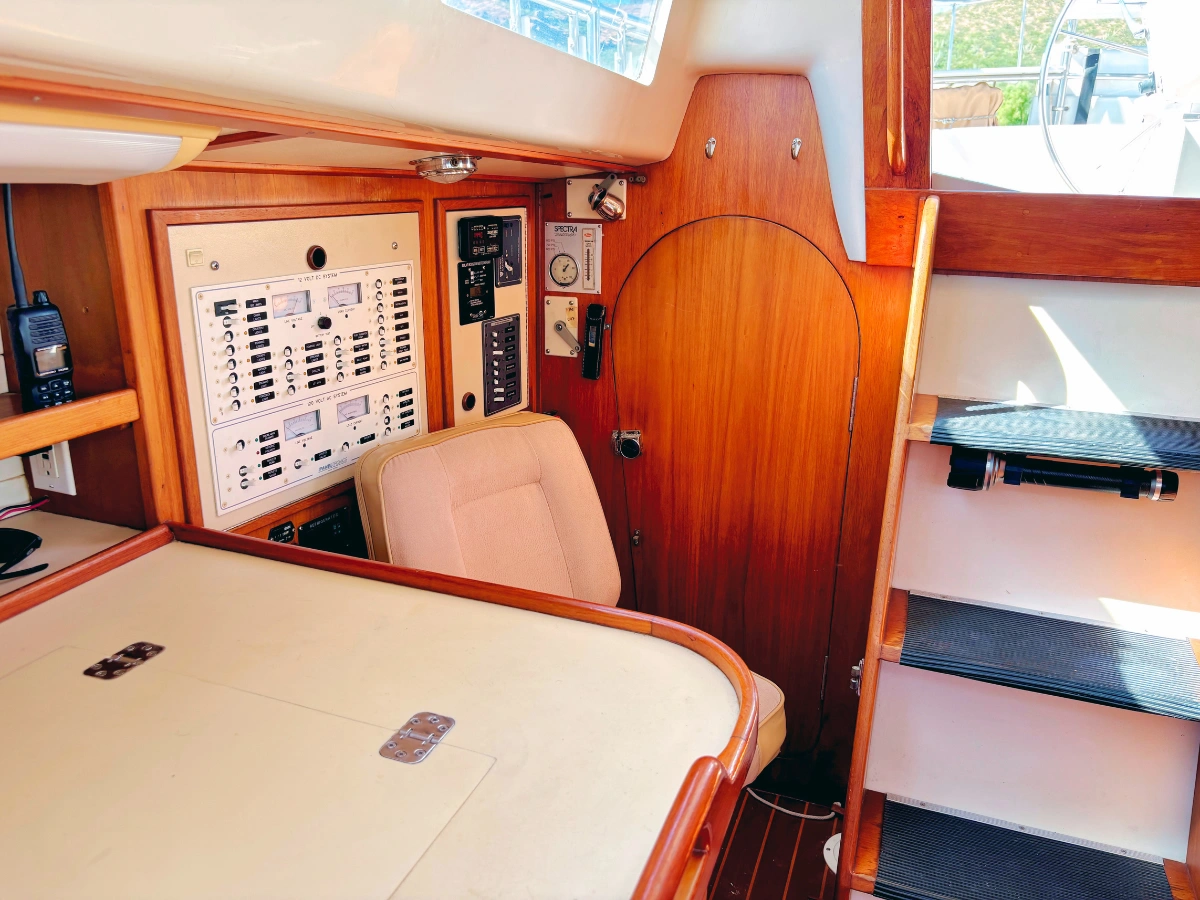
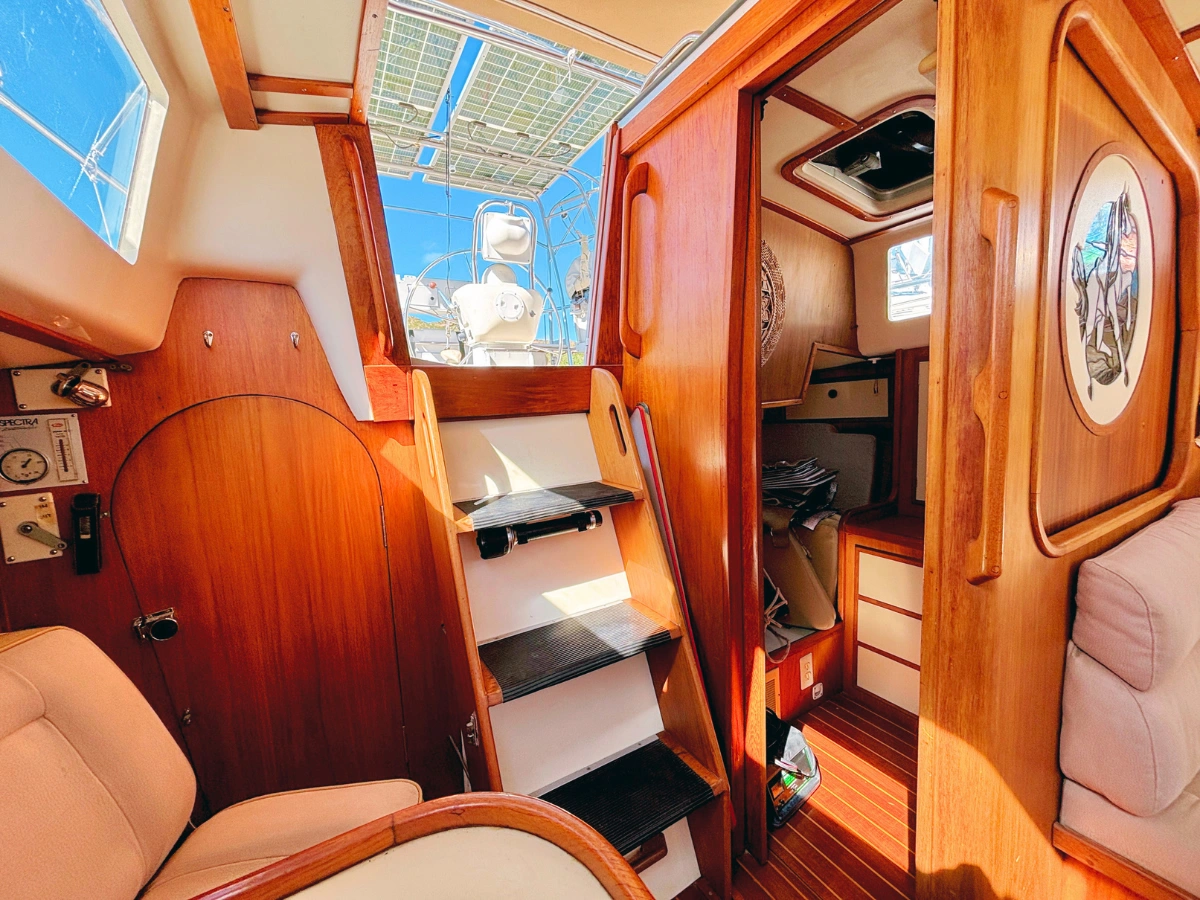
The pilothouse is one of Cahoots’ defining features. Nine fixed windows provide approximately 180 degrees of visibility, creating a bright interior while allowing the crew to monitor conditions from inside. The centerline interior helm can be used either seated or standing and provides a clear view forward through the pilothouse. The salon is located within the pilothouse and features a comfy, curved U-shaped settee with Ultra-Hide cushions that surround a folding dining table. To starboard, the dedicated navigation station incorporates a lift-top chart table, navigation equipment, and communications gear.
The arrangement creates a true working pilothouse rather than simply a raised saloon.
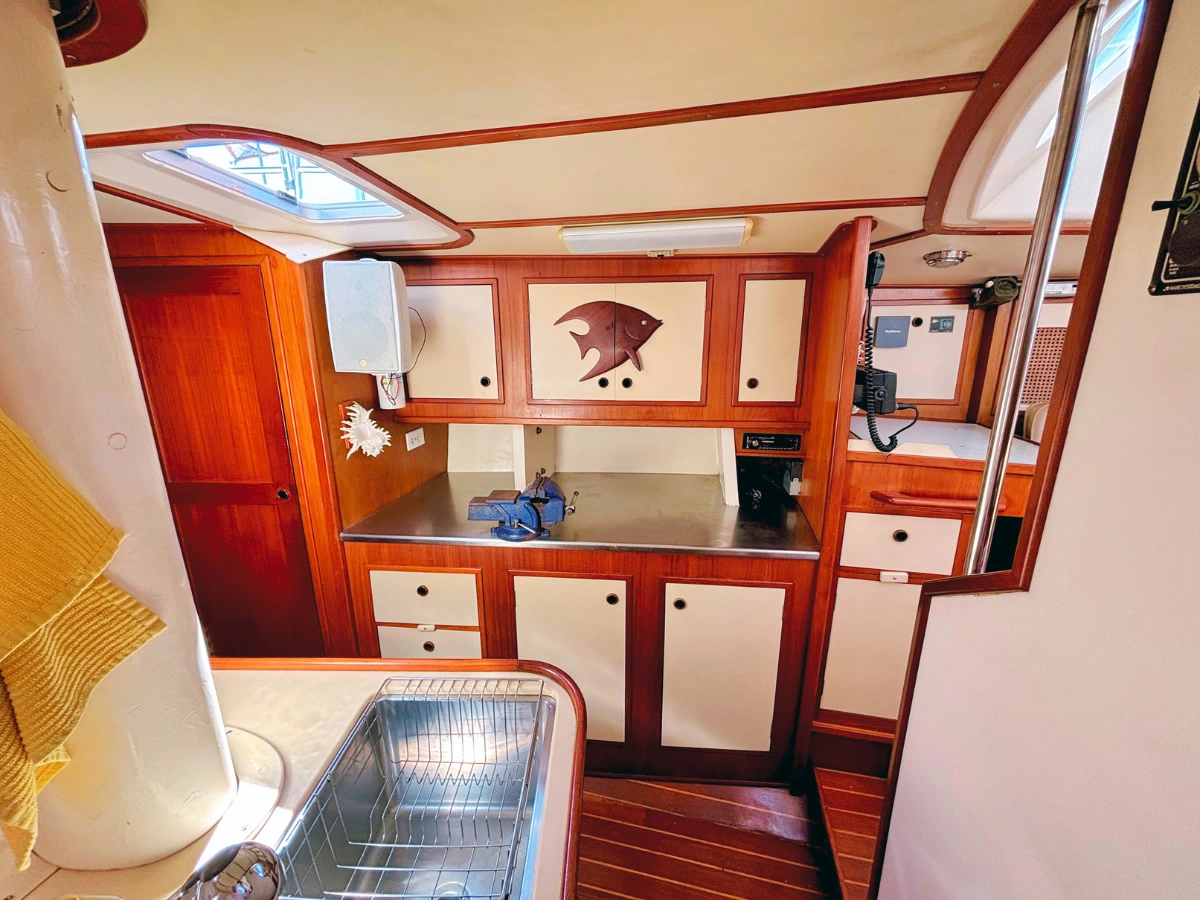
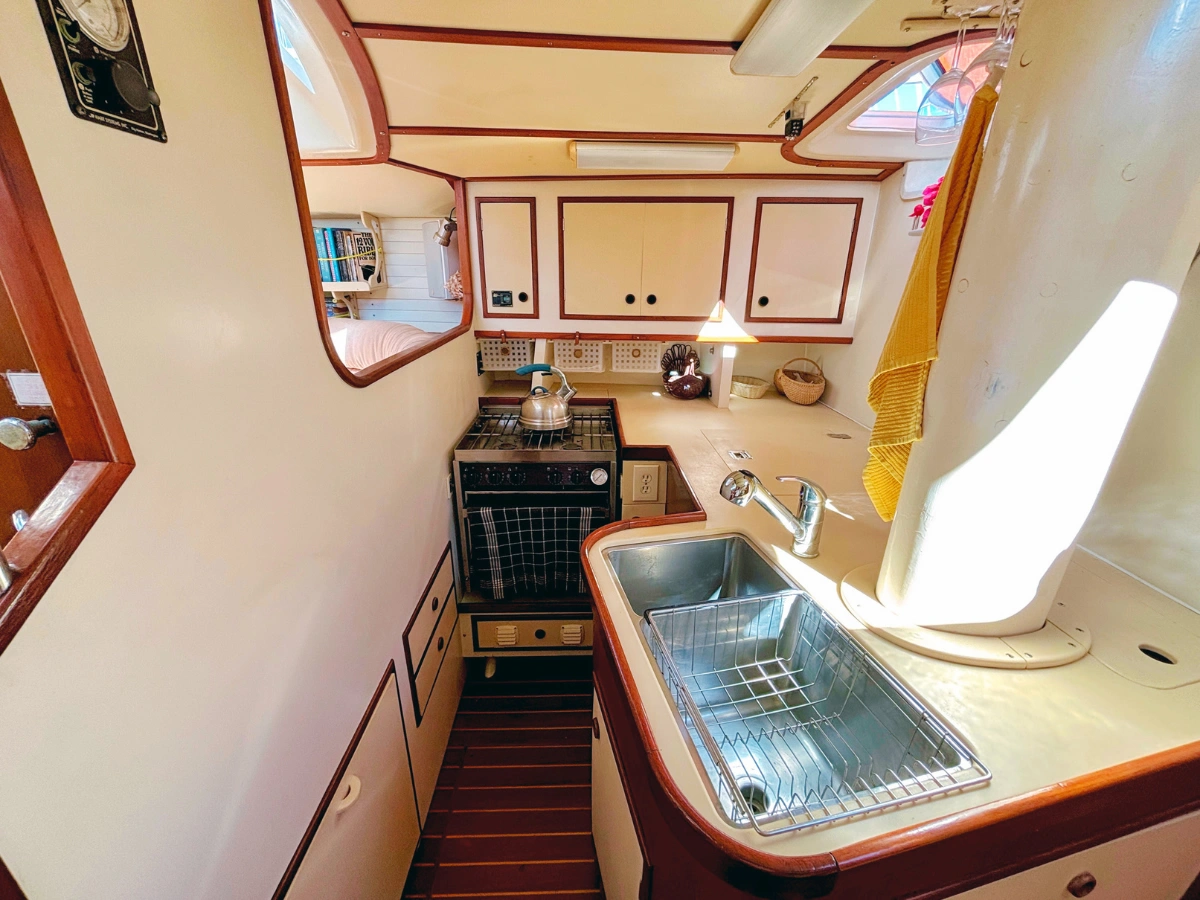
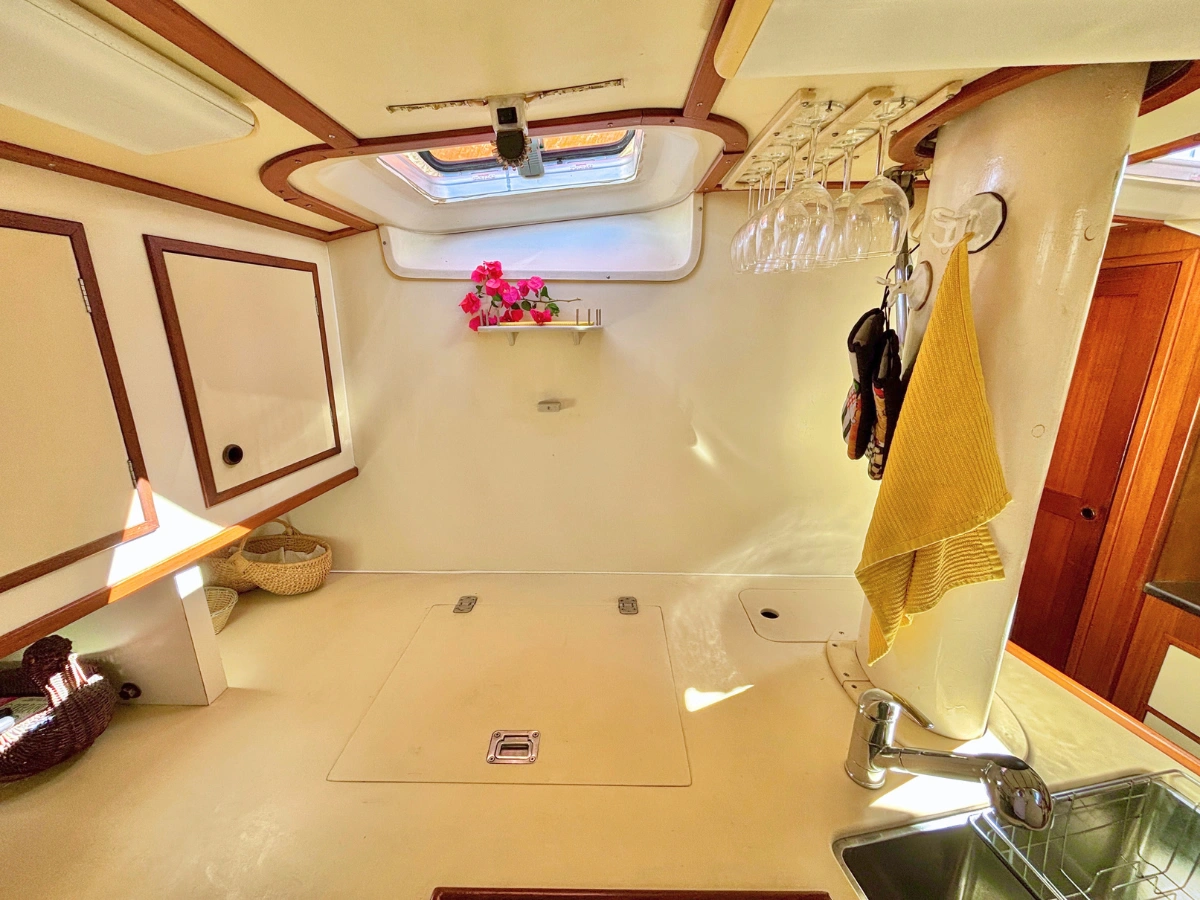
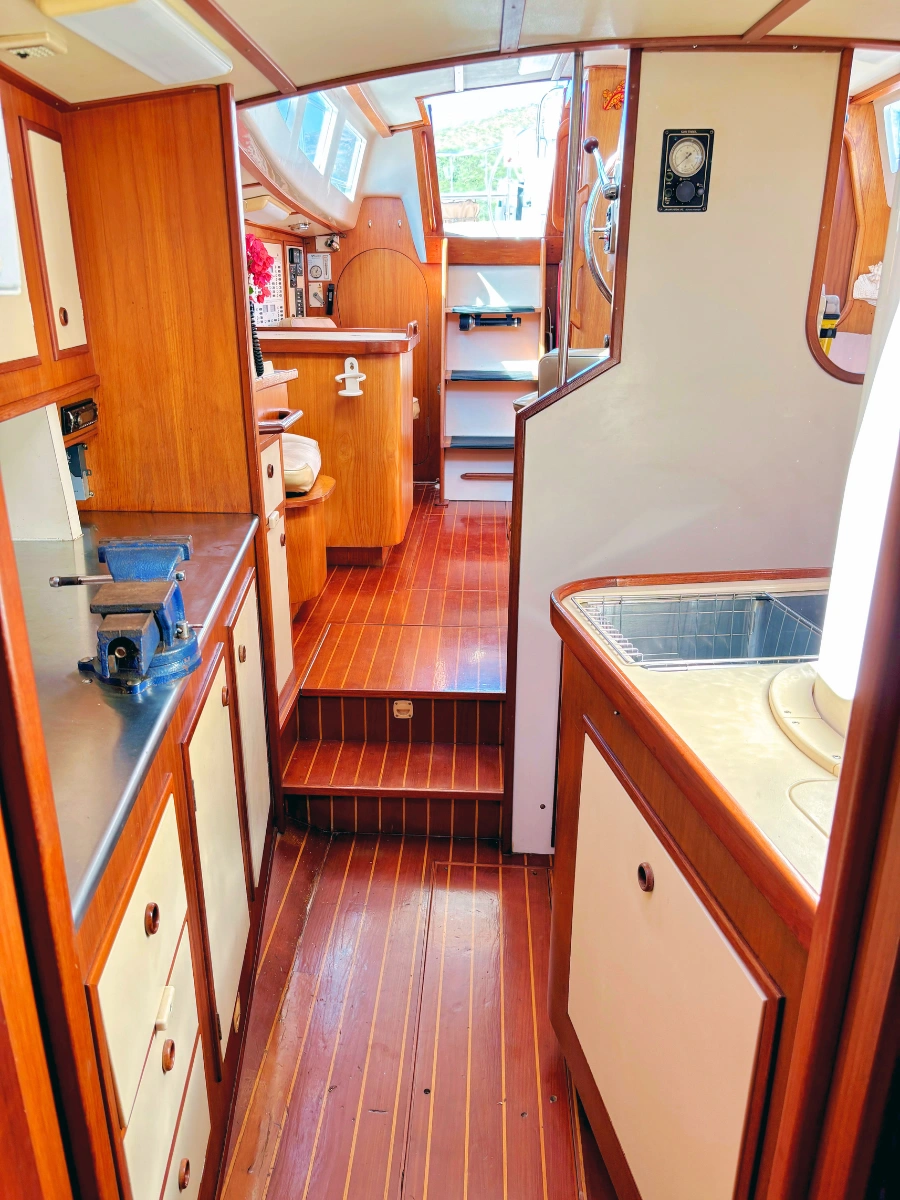
Forward of the pilothouse, the galley is positioned lower in the vessel for security underway, with a double-basin sink, gimballed 3-burner propane stove with oven, and two large and separate Frigoboat refrigerator and freezer compartments, each with its own compressor and controls. Opposite the galley, a long stainless-steel work surface has been configured as a proper onboard workshop with a mounted vise and storage above and below. For cruisers maintaining their own boat far from marine services, this is a particularly valuable feature.
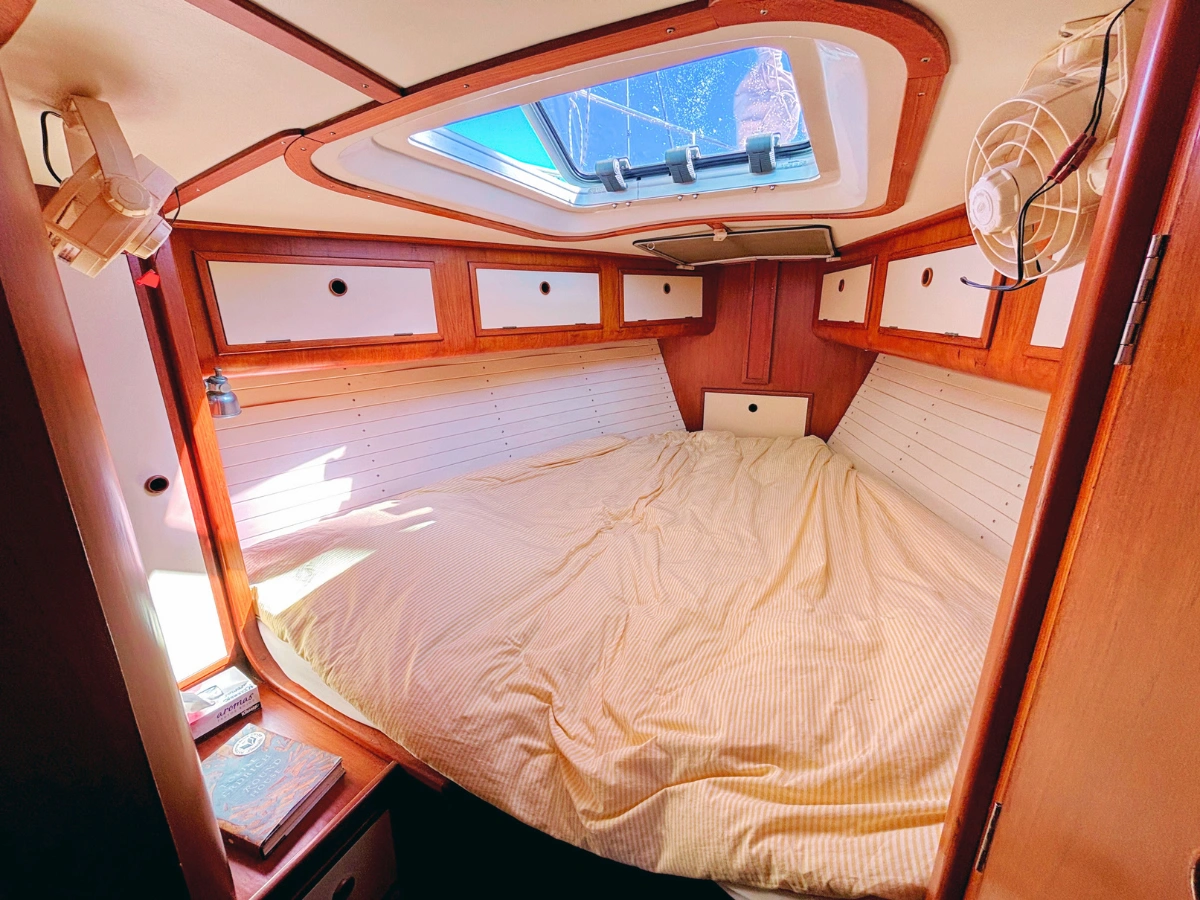
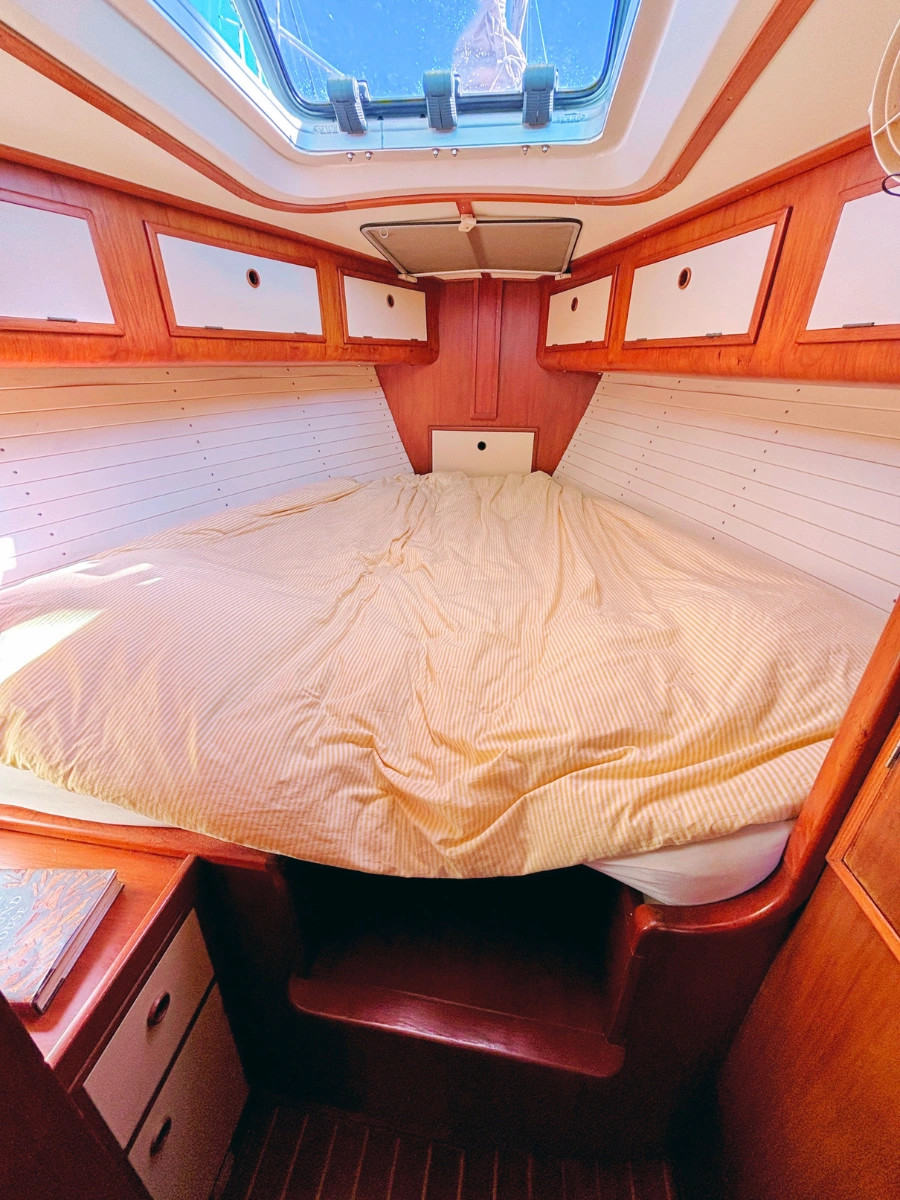
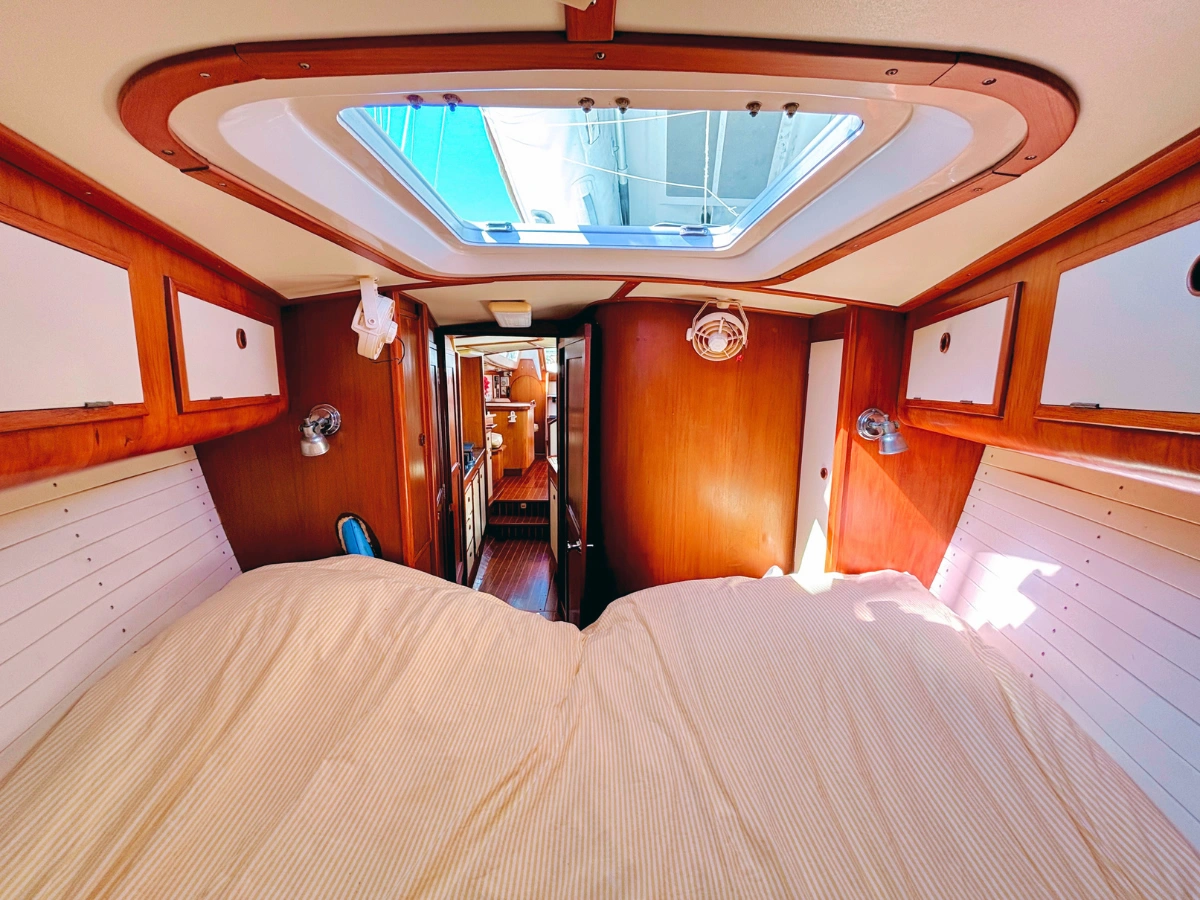
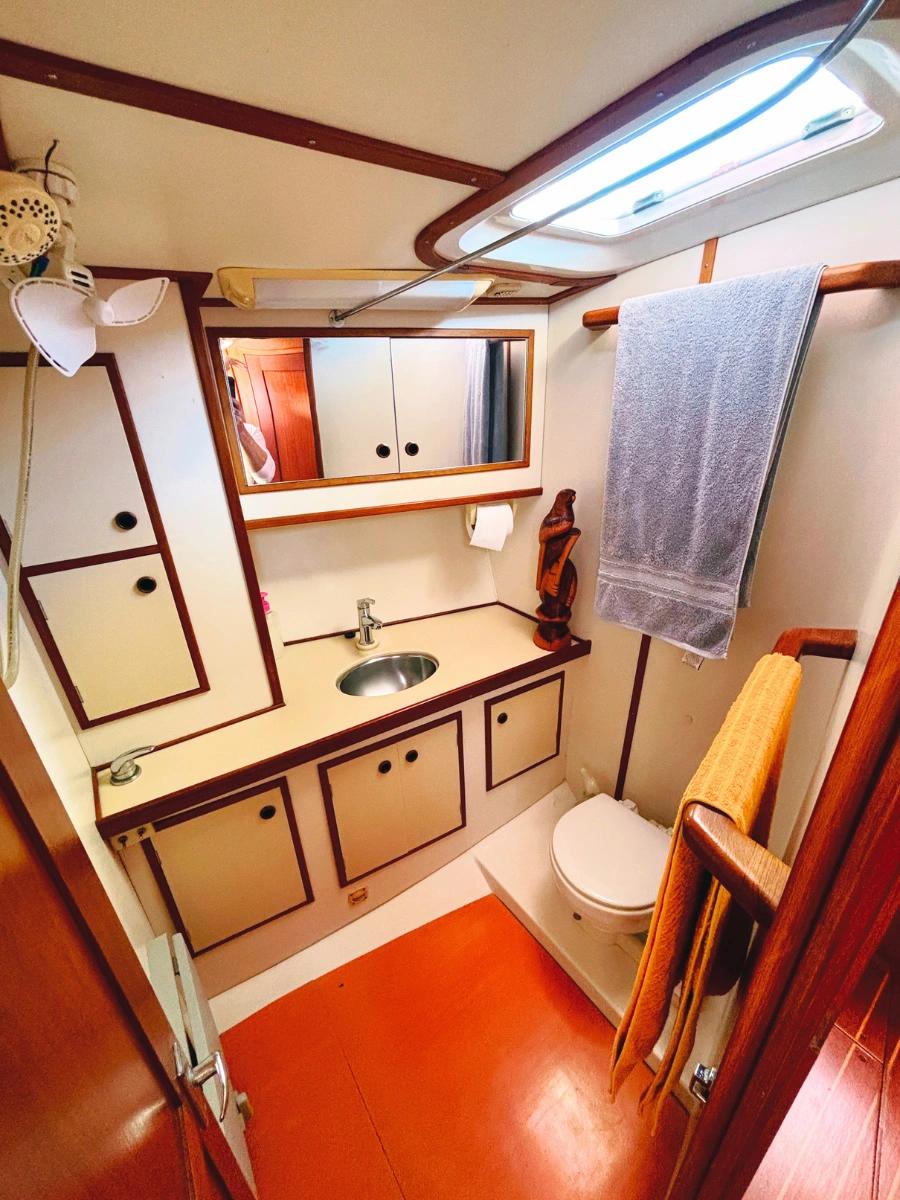
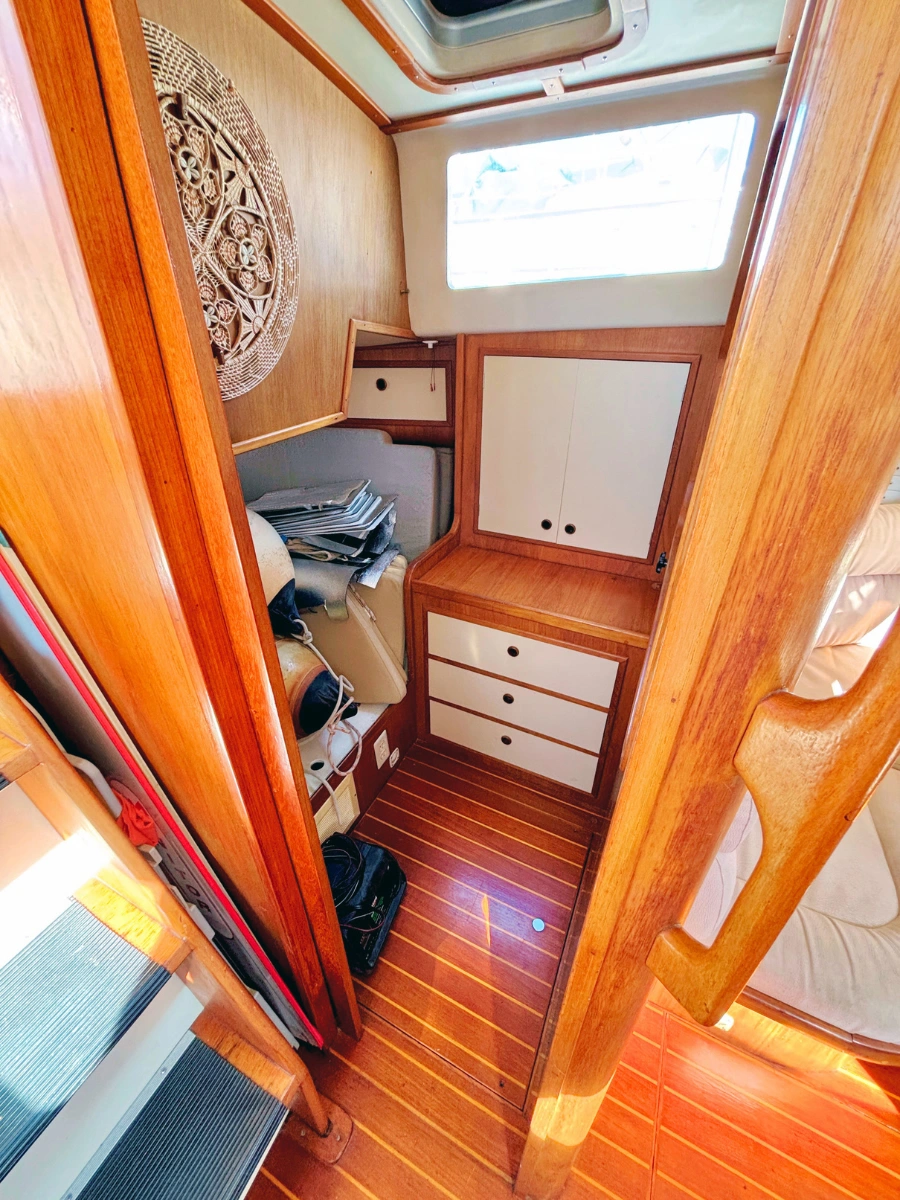
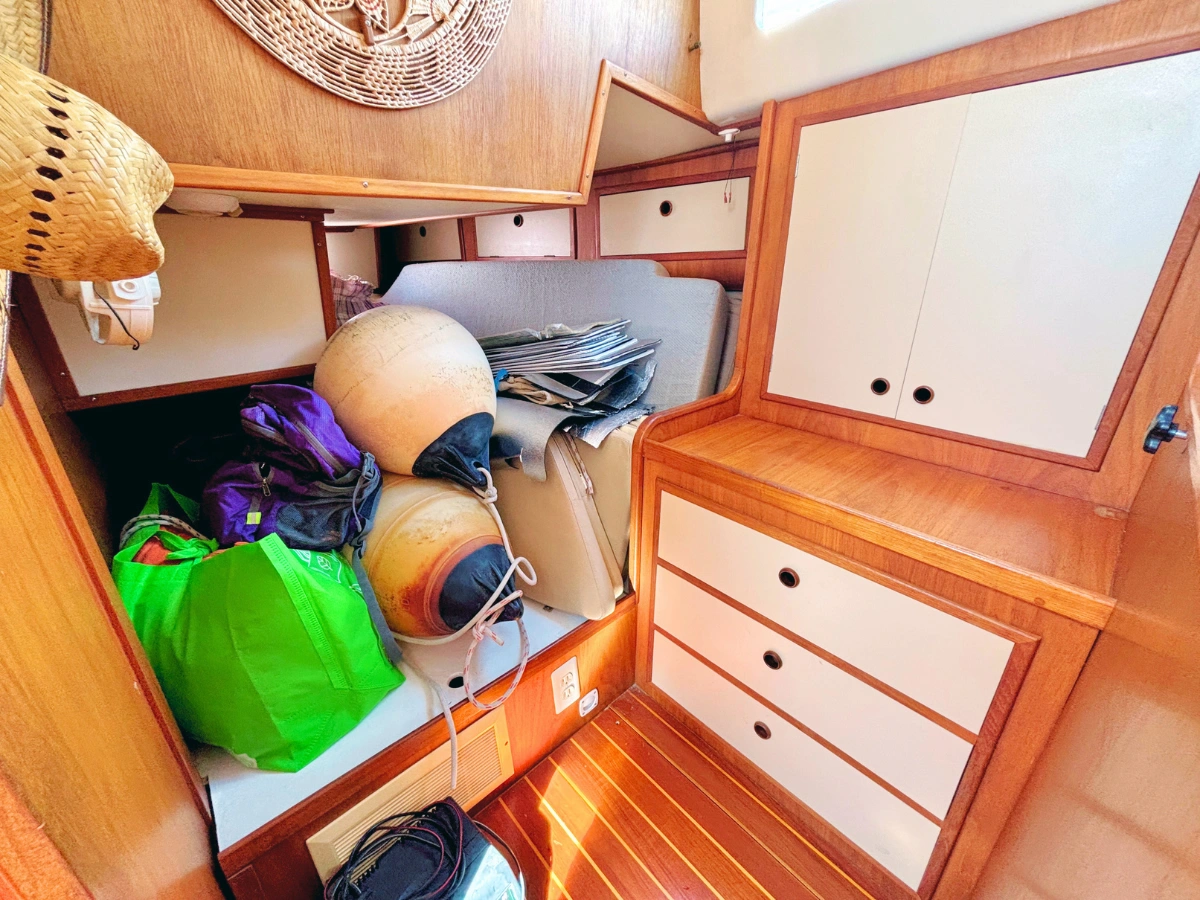
There are two spacious and well-ventilated staterooms, the forward King-sized V-berth and the Queen-sized aft cabin behind the salon. Each comes with plenty of cabinetry and storage space, hatches, deadlights, and Hella fans for comfort. A single enclosed head with full shower and hot and cold pressurized water serves the entire boat. The aft cabin also includes a distinctive custom stained-glass panel built into the divider between the cabin and pilothouse – just another unique touch that adds a special beauty and character to this vessel.
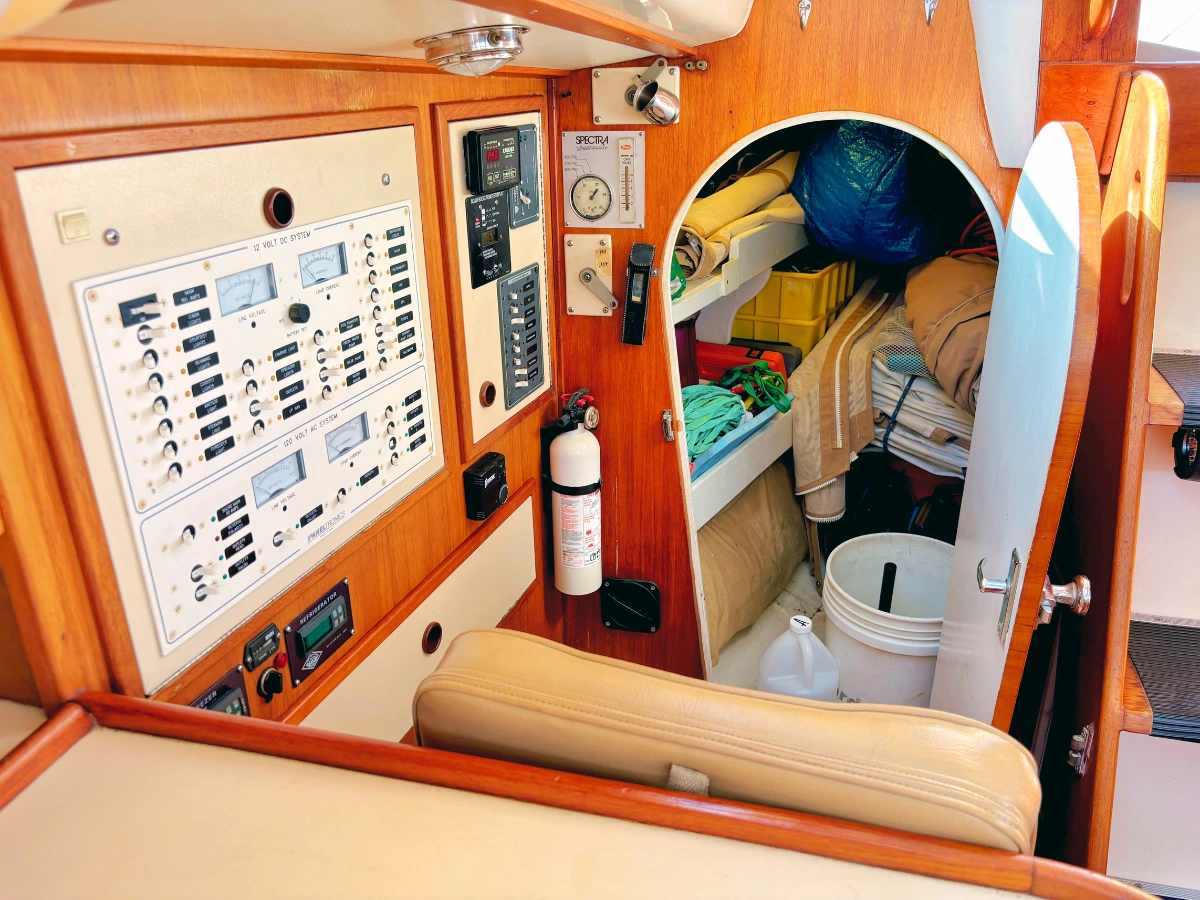
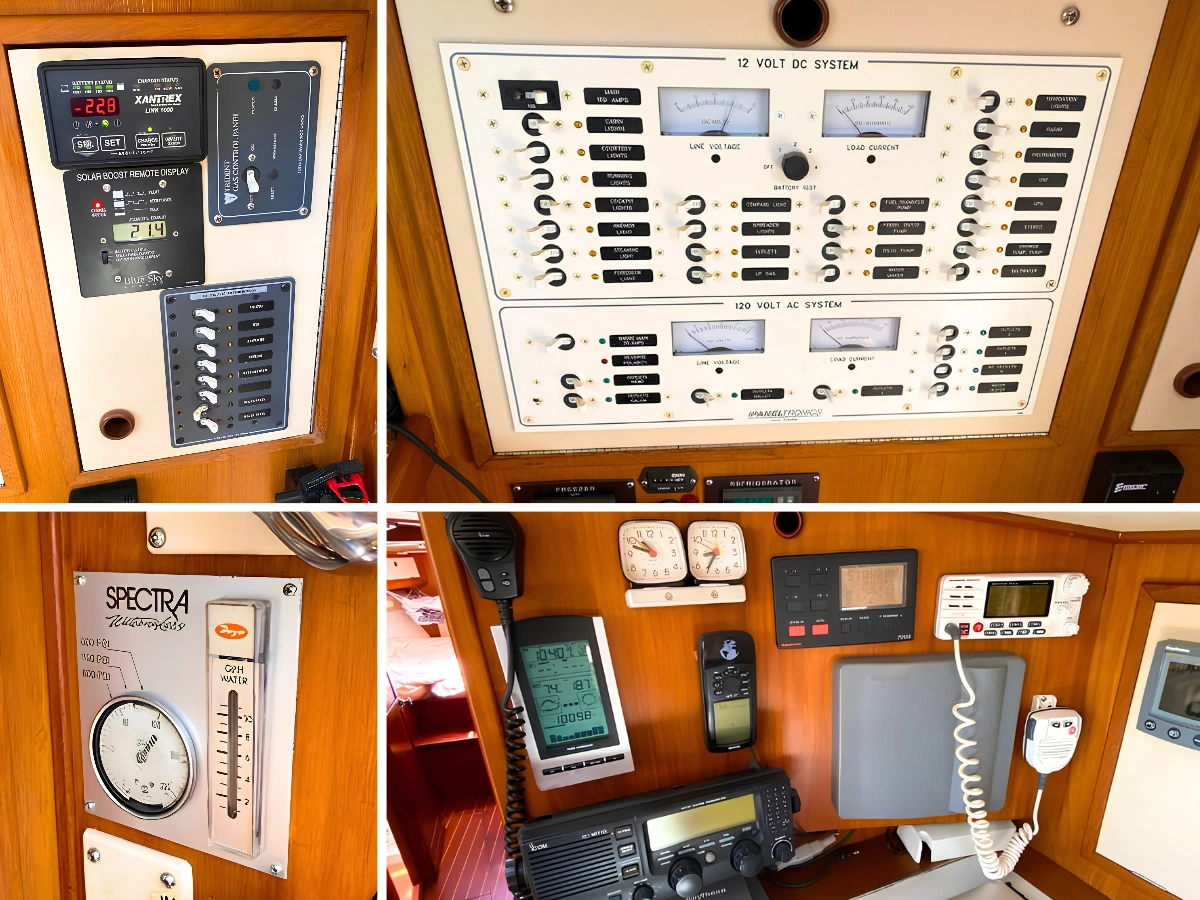
Beyond the numerous lockers and cabinets throughout the interior, a long storage compartment extends deep into the aft starboard section of the yacht. This space is suitable for spare sails, tools, parts, water toys, and oversized cruising equipment and also houses the Spectra watermaker installation.
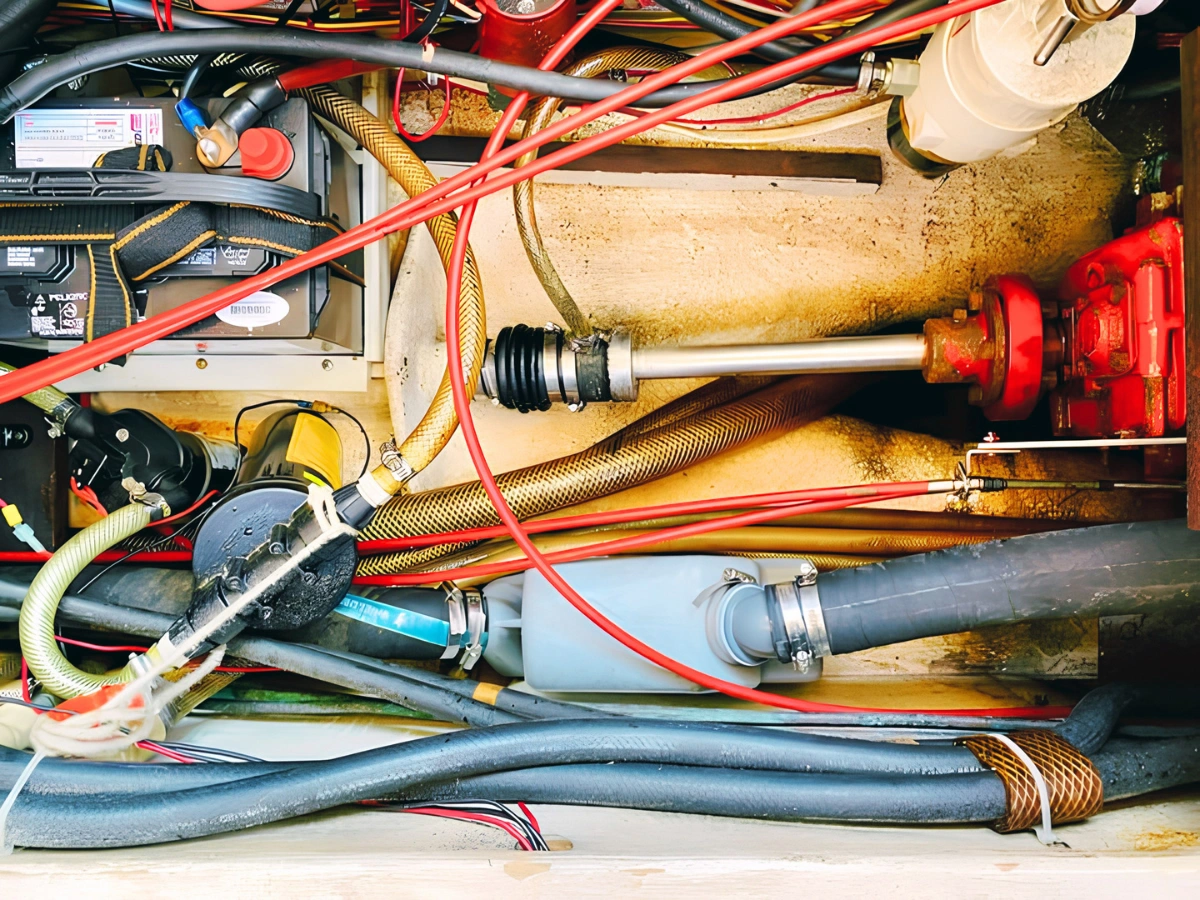
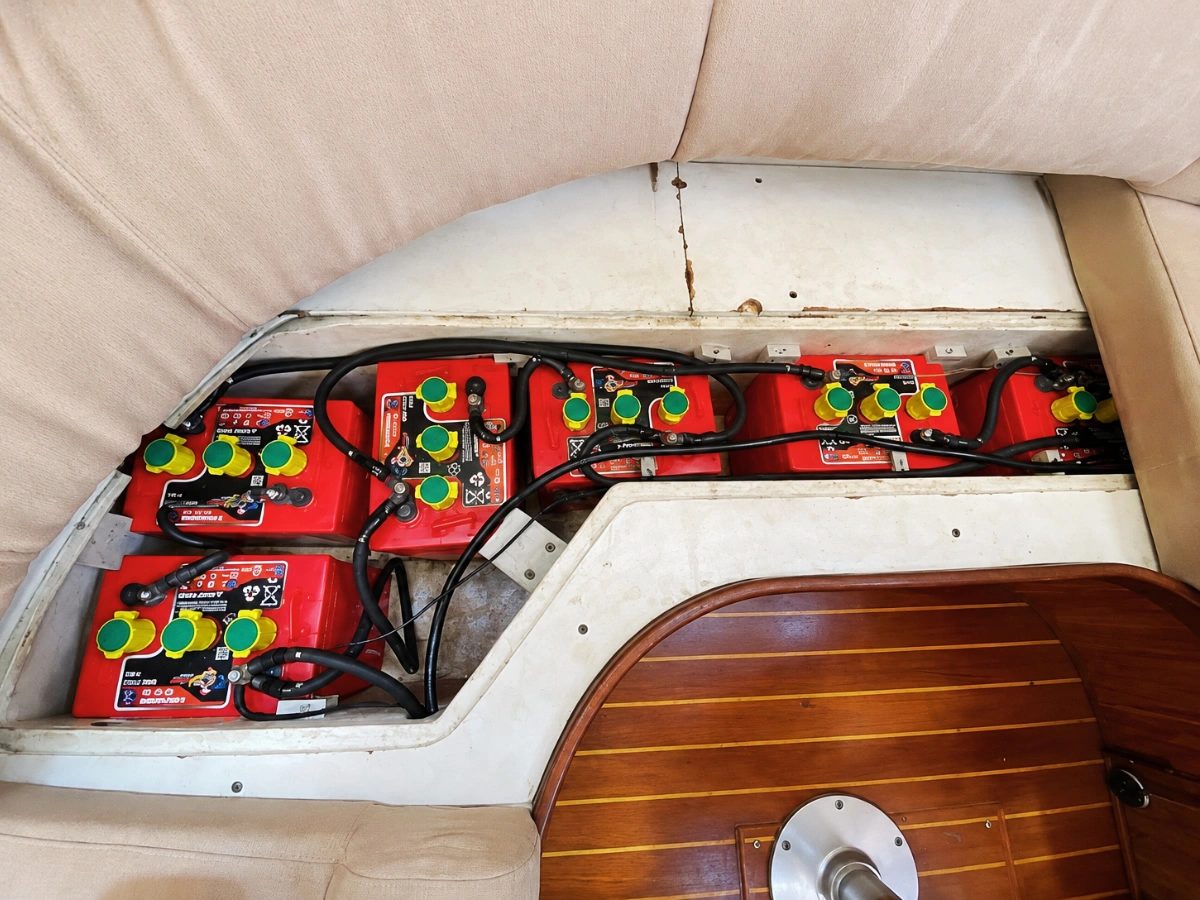
Cahoots has a strong electrical system oriented toward extended time away from shore power. The house bank consists of six Trojan 6V deep-cycle batteries installed in April 2026, supported by a dedicated 12V starting battery. Charging is supplemented by 820 watts of solar installed in 2023, a Blue Sky Solar Boost regulator, two alternators, and a Max Charger MC-618.
The system also includes a Heart Freedom Marine inverter and a Honda 2000i portable generator.
Navigation and communications equipment include Raymarine/Raytheon chartplotter, radar, depth, speed, wind, and rudder-angle instrumentation, along with repeaters at the helm. Communications equipment includes an Icom IC-M710 SSB, Standard Horizon fixed VHF with AIS reception, and a handheld VHF. And a Raymarine Hydraulic autopilot and Monitor windvane provides independent self-steering capability offshore.
Additional cruising equipment includes an Espar diesel heater, hot-water system, Spectra watermaker, fresh- and salt-water washdown capability, cockpit shower, stainless swim and boarding ladders, Sunbrella dodger and bimini, cockpit cushions, and stern-mounted Magma BBQ.
Cahoots was conceived by experienced cruisers, built specifically for them, and then used exactly as intended. Her pilothouse, dual steering stations, conservative proportions, serious sail inventory, heavy ground tackle, large fuel capacity, Monitor windvane, watermaker, workshop, storage capacity, and recent mechanical and electrical upgrades all point toward the same purpose: comfortable, self-reliant cruising over long distances.
Currently stored on the hard in San Carlos, Sonora, Mexico, Cahoots offers a rare opportunity to acquire a genuinely proven custom pilothouse cutter with a cruising history that spans the Caribbean, South Pacific, North Pacific, and both coasts of North America.
Design Features & History
- Custom Jerry Cartwright pilothouse cutter, commissioned by experienced circumnavigators
- Proven Caribbean, South Pacific, North Pacific, and trans-Panama cruising history
- Approximately 46 ft LOA with modified fin keel and skeg-supported rudder
- Cutter rig with approximately 905 sq. ft. sail area
- Harken Battcar mainsail system
- Two extendable poles at mast
- Lewmar deck hardware and winches
- Deep, secure offshore cockpit with high coamings
- Full-perimeter stainless-steel railing
- Dual steering stations: interior hydraulic steering and exterior cable steering
- 180-degree pilothouse visibility
- Approximately 132 gallons fuel capacity
- Approximately 100 gallons freshwater capacity
- Dedicated stainless-steel workshop bench with mounted vise
- King-size forward berth and Queen-size aft berth
- Hot and cold cockpit shower
- Fresh- and salt-water deck washdown
Highlights
- Large sail inventory: mainsail, jib, genoa, staysail, cruising spinnaker, and storm sail
- Monitor windvane self-steering
- Spectra watermaker
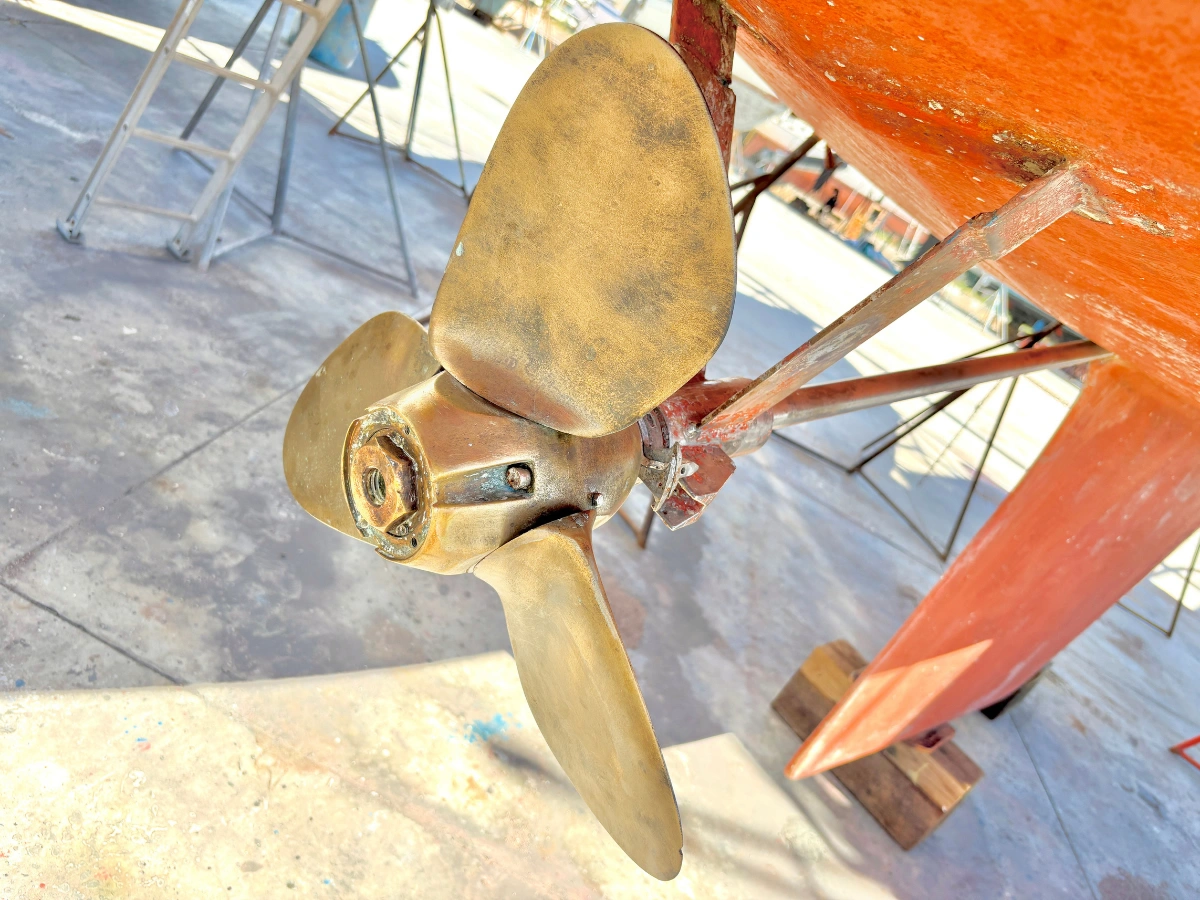
- VeriProp folding propeller
- Spur line cutter
- Raymarine HSB Chartplotter
- Raymarine Hydraulic ST6000 Plus Autopilot
- Raymarine wind/depth/speed instruments
- Dual Racor fuel filtration
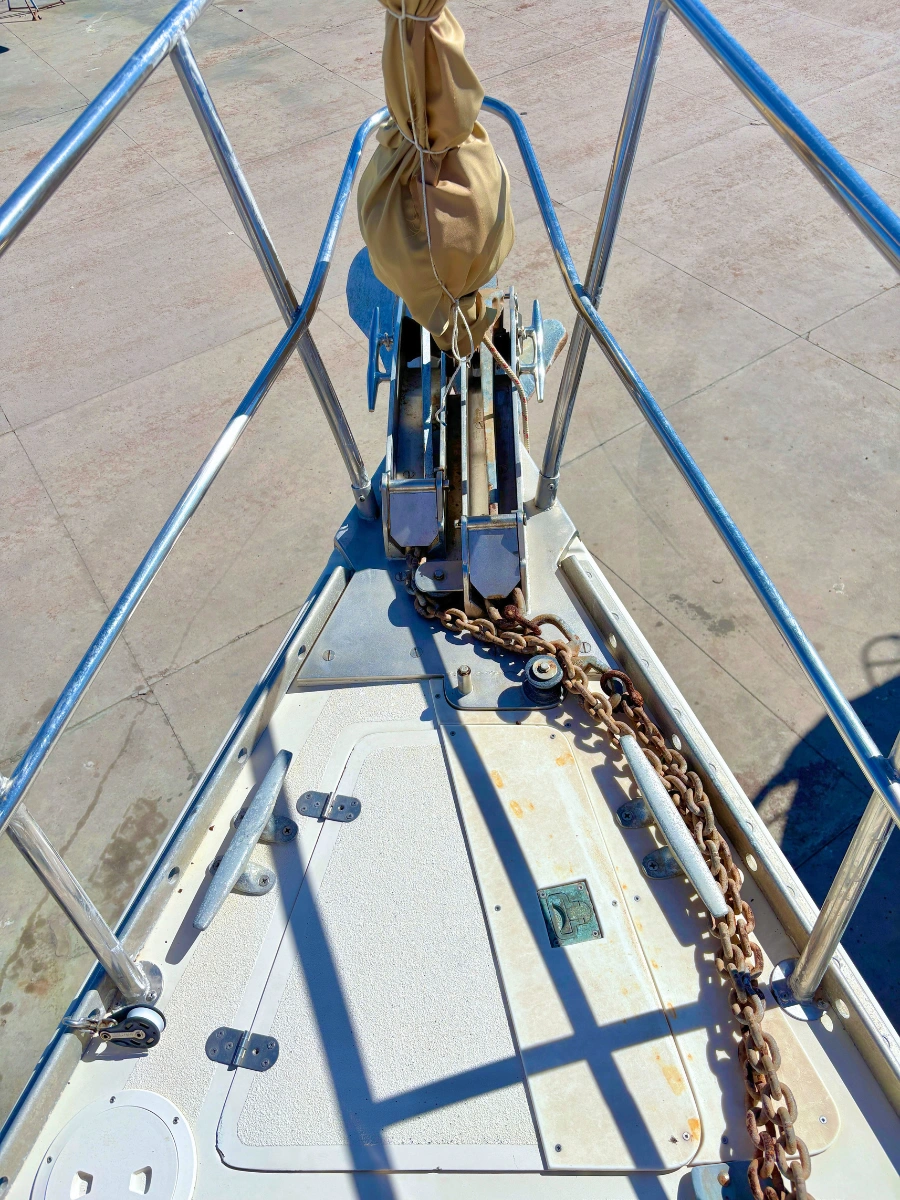
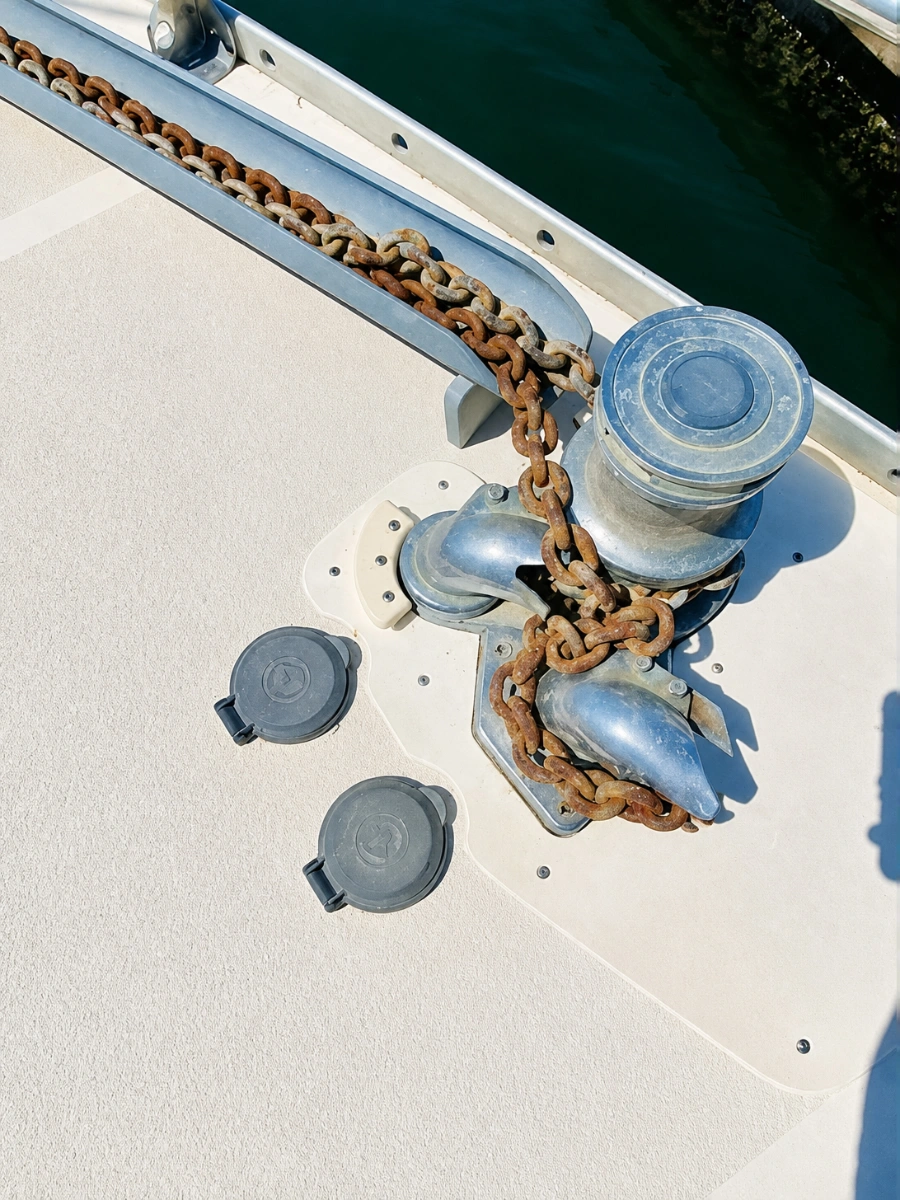
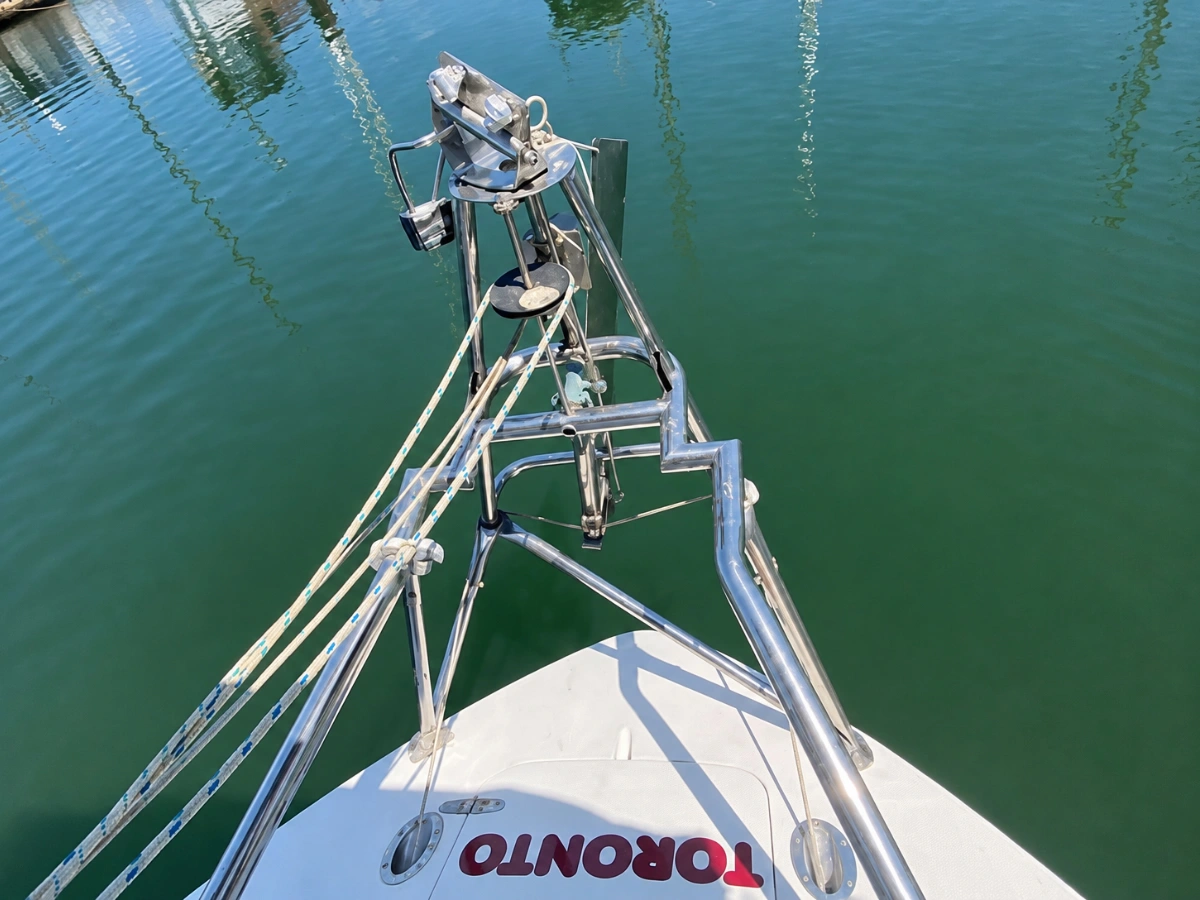
- 60 lb CQR primary anchor with approximately 300 ft chain
- 45 lb Delta secondary anchor
- Maxwell VWC 2200 windlass with Bluetooth remote
- Dual 200A Balmar alternators
- Max Charger MC-618
- Heart Freedom Marine inverter
- Honda 2000i portable generator
- Separate Frigoboat refrigerator and freezer systems
- Espar diesel heater
Upgrades & Recent Maintenance
- Standing rigging (replaced in 2010 and inspected March 2026)
- Stainless-steel chainplate upgrade (completed in 2023)
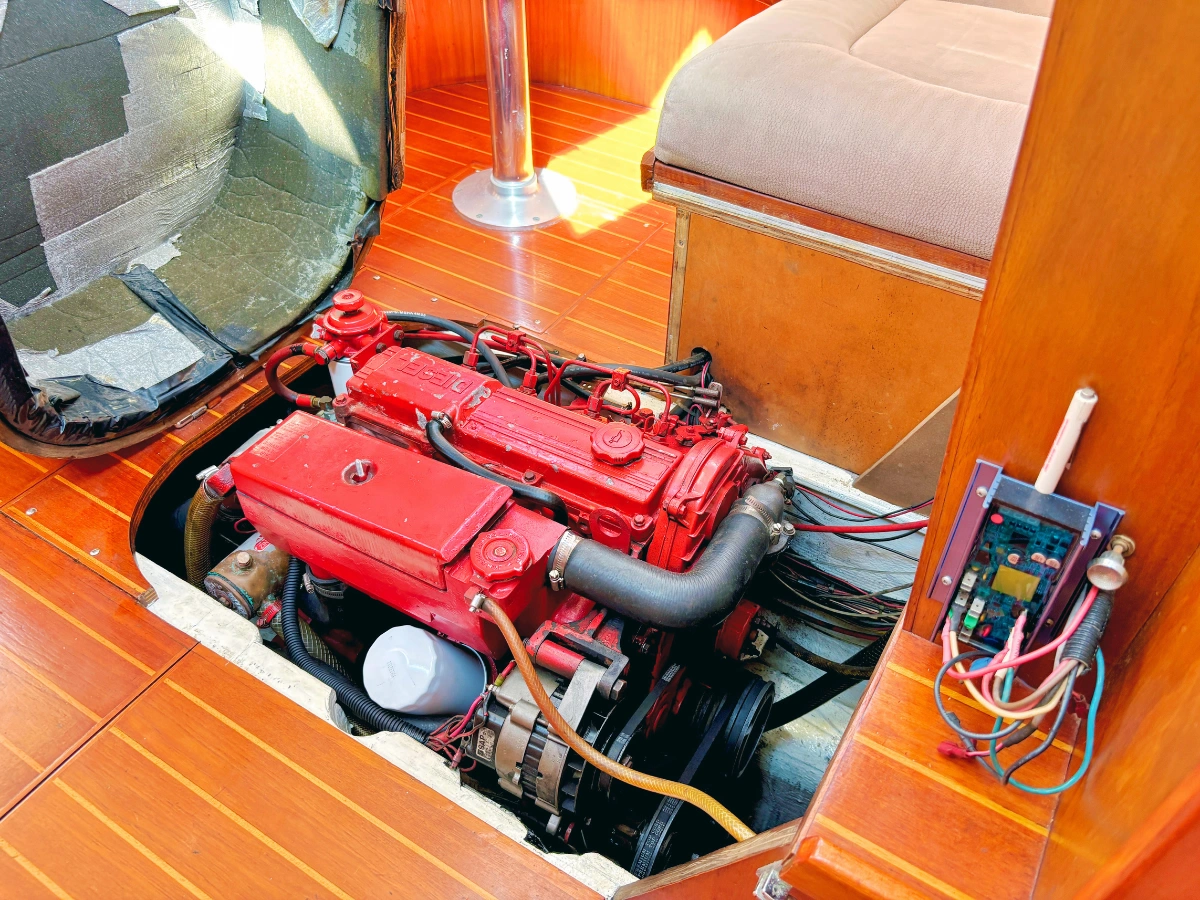
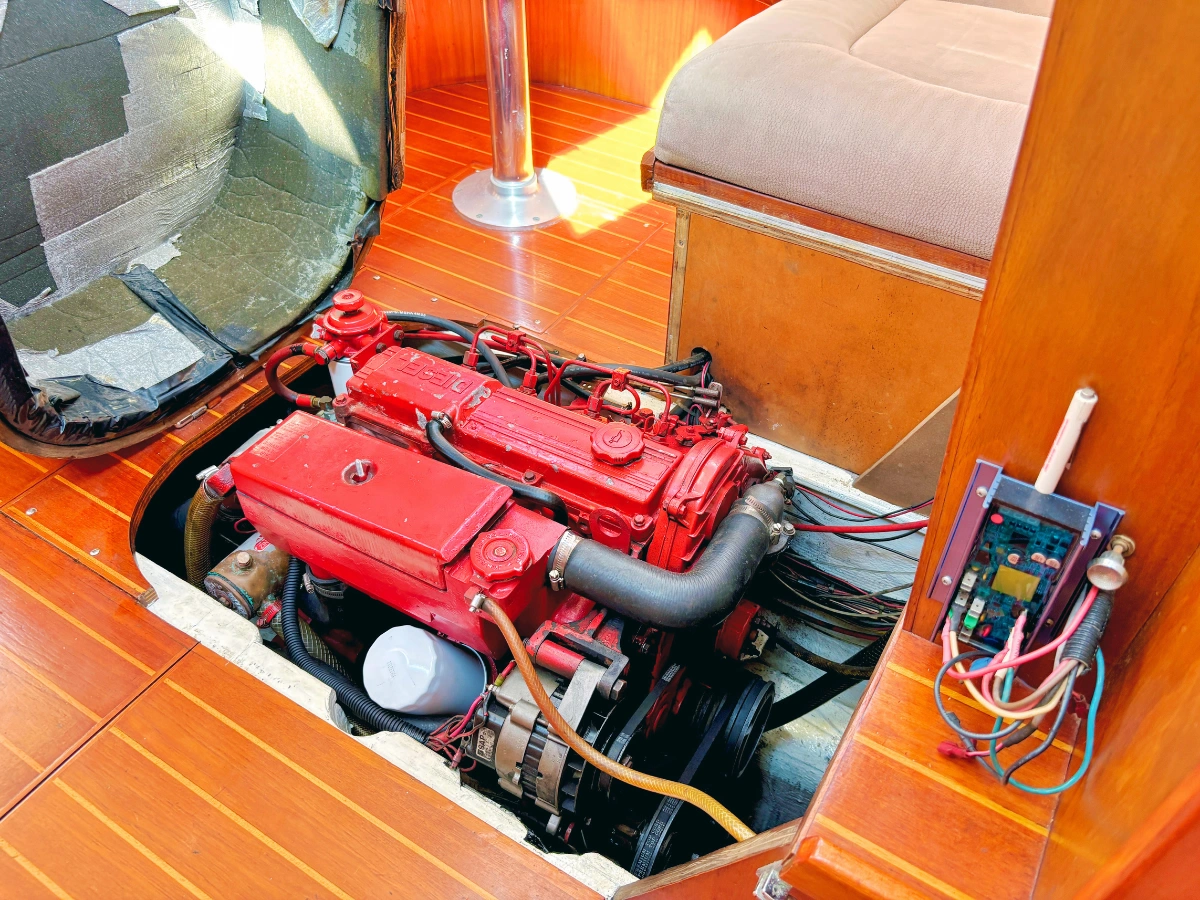
- Westerbeke 55A diesel (rebuilt in 2026) with approx. 500 nautical miles since rebuild
- 820W solar array (installed in 2023)
- Six new Trojan 6V house batteries (installed April 2026)
- Start battery (replaced in November 2026)
- Electrical panel (replaced in 2022)
- Bottom last painted November 2024
